Pinkishe Foundation

31/10/2026

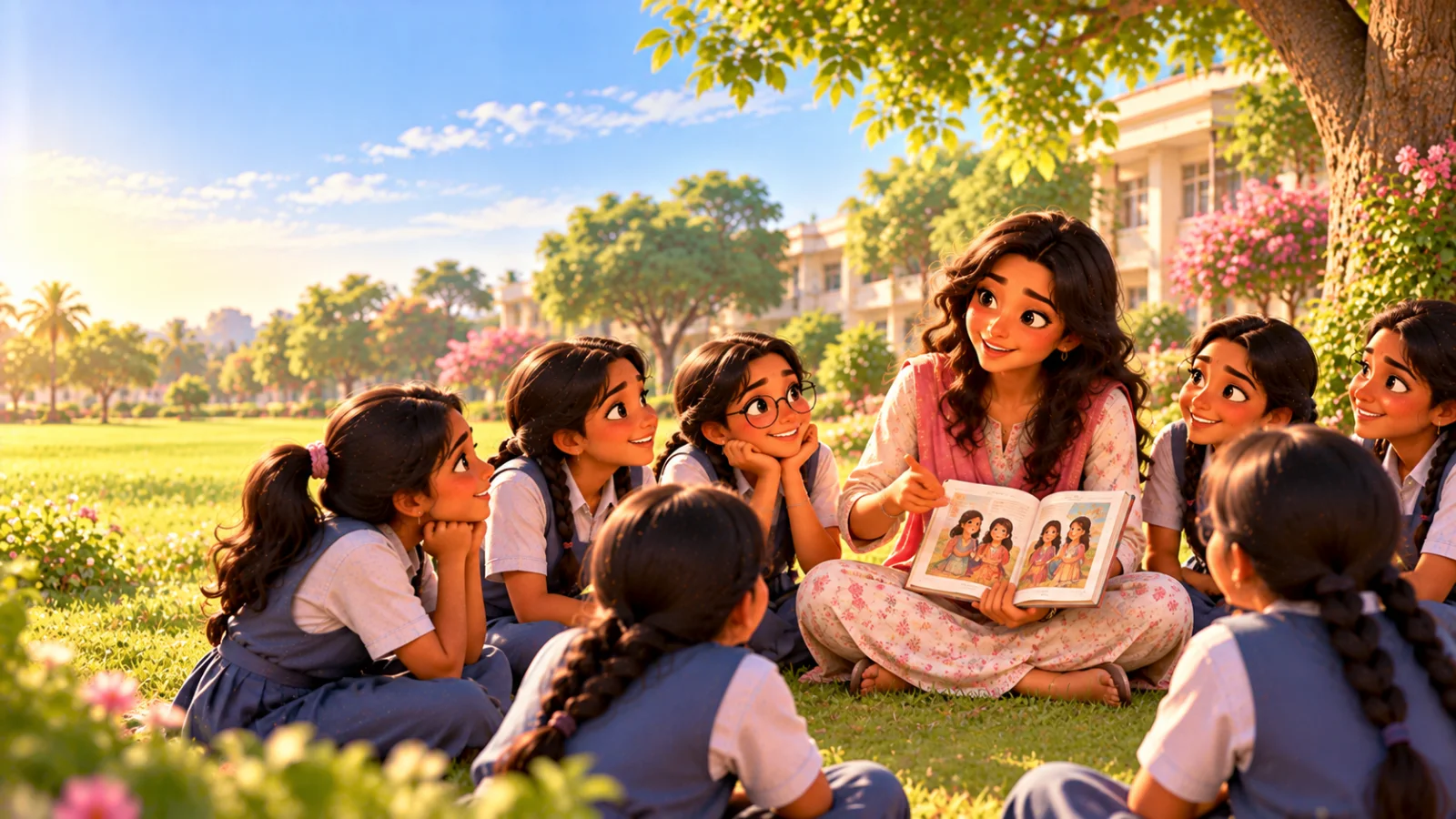
Periods are a natural part of life. Yet at school they can bring a lot of worry, especially for a girl who gets her first period in class. The fear of a stain, of whispers, and of not knowing what to do can be overwhelming. This is where teachers make the difference. With correct information, practical support and a calm, open classroom, a teacher can turn a frightening day into one where a girl feels safe and confident.
The need is real. 1 in 2 girls knew nothing about periods before their first, and 1 in 4 girls stay home from school during their periods (BMJ Open review of Indian studies, 2016). For many girls, a teacher is the first adult who explains periods properly.
Picture a girl in class 6 who notices a stain on her uniform. She is scared, not only about what is happening to her body, but about the other children laughing and about not knowing whom to ask. What she needs in that moment is one calm adult who knows what to do. Very often, that adult is her teacher.
Here is how teachers can be that adult.

Teachers are in a unique position to clear up period myths. Talking openly about the menstrual cycle, and using correct words such as "period" and "menstruation", makes periods normal and gives students the right information. Many girls still hear that they must not bathe, play, or touch certain foods during their period. None of this is true. Period blood is not dirty or impure. See busting period myths for good for more.
Teachers can explain the basics in simple words:
This helps students stay comfortable and clean through the school day. To compare products, see which menstrual product is right for you.
Not every girl can afford pads, and not every girl has one with her when her period starts. Teachers can push for pads to be kept in school, whether in a working vending machine, the sick room or a teacher's cupboard. They can also set up a quiet way for a girl to ask for one without having to explain.
Periods are natural, but they can be uncomfortable. Girls need clean toilets with water, soap, a door that locks and a covered bin or another safe way to dispose of pads. Teachers can report problems and follow up until they are fixed. This gives girls a safe space to manage their periods with dignity.
A student with cramps or a stain may need a spare uniform, a hot water bottle, or a quiet place to rest for a while. A small kit in the staff room helps: pads, spare underwear, paper bags, and an old dupatta or jacket she can tie around her waist. Teachers should not hand out medicines on their own; parents can ask a doctor or pharmacist which painkiller is right for their daughter.
Talking about periods in class, with boys included, makes periods normal and stops period shaming. When all students understand periods, the school becomes kinder and more supportive. Treat teasing about periods like any other bullying, and act on it at once.
Teachers do not have to do this alone. They can work with a colleague trained in menstrual health, the local ASHA worker, the school's health and wellness ambassador if there is one, and with parents, to hold information sessions for students. Organisations that work on menstrual health in schools can help too.
Pinkishe Foundation's Shakti Shala programme works with government schools on menstrual health. Read about Shakti Shala.
On 30 January 2026, in Dr Jaya Thakur v Government of India, the Supreme Court held that menstrual health is part of the right to life under Article 21. It gave directions for classes 6 to 12 on free products, vending machines, safe disposal, education, teacher training and annual inspection. In an order of 1 September 2026, the Court set the standard as compostable products meeting ISO 17088 read with IS 5405, and directed states towards reusable cups, period panties and reusable napkins.
For teachers, two of these directions matter most: education for students and training for teachers. A trained, confident teacher is at the heart of both.
Teachers are not doctors, but they often notice a problem first. Speak to the parent and suggest a doctor if a student:
Teachers have the power to turn a stressful time into a manageable one. By giving correct information, building a supportive school and talking about periods without shame, they help students manage their periods with confidence and dignity.
Last reviewed: October 2026.
Have a question about periods at school? Call our menstrual helpline on 85888 70999. It answers at any hour.
A simple printable sheet that marks your period days, your fertile window and your ovulation day. We will email it to you now.
We will send the tracker and a few gentle menstrual health emails from Khyati at Pinkishe. No spam, unsubscribe any time.
Prefer to work out your dates now? Open the free ovulation calculatorDo not worry. Go to a teacher you trust, or the school's health and wellness ambassador if there is one. They can give you a pad and help you. If there is a stain, a jacket or dupatta tied around your waist will cover it. Next time, keep a spare pad in your school bag.
Periods are a normal part of life, and your teacher is there to help. You can ask to speak to her privately after class. No question is silly. Your teacher will understand.
Tell your teacher. She may let you rest for a while or give you a hot water bottle. If the pain is so bad that you often miss class, tell your parents so they can take you to a doctor.
By talking openly about periods in class, including boys, using correct words, stopping teasing at once and making sure girls have pads, water and clean toilets.
Clean toilets with water, soap and a lock, a covered bin or another safe way to dispose of pads, a stock of pads, lessons on periods for girls and boys, and at least one trained teacher every student knows she can go to.
Teachers are often the first adults to explain periods properly. By clearing up myths, keeping products and clean toilets within reach and stopping teasing, they help girls stay in class with dignity. The Supreme Court's 2026 directions on education and teacher training make their role even more important.
Pinkishe Foundation is a specialist implementation organisation for menstrual health. We deliver, reliably, in schools and communities across India. Support our work with a donation.
₹1,100 gives one girl a year. Donations are eligible for deduction under Section 80G.