A three-year district model that makes menstrual health support reliable in every government school.
Built on the Supreme Court’s 2026 directions · Aspirational districts first · Measured at the start, middle and end
Nari Samman, with Indus Towers, January 2025 to March 2026 · Pads from the project dashboard, August 2026
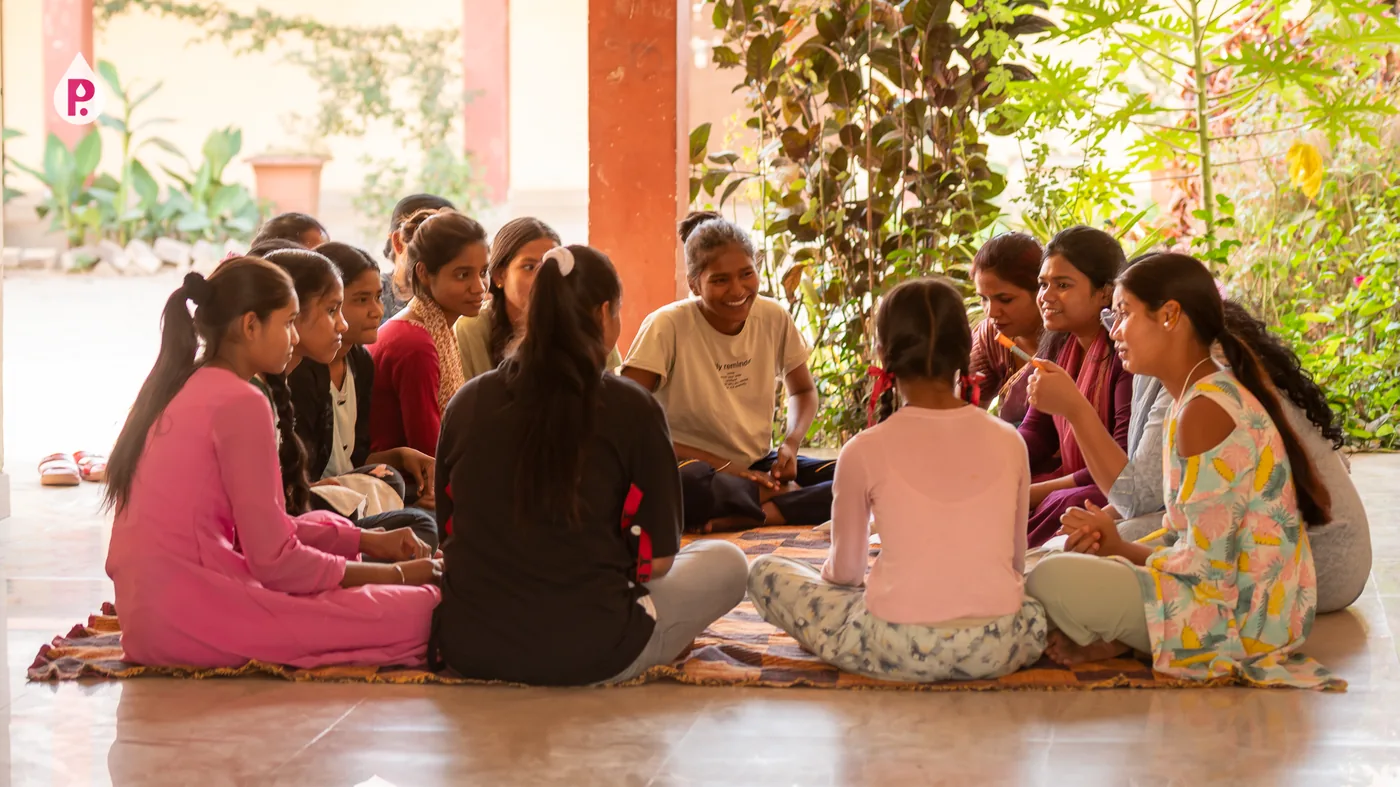
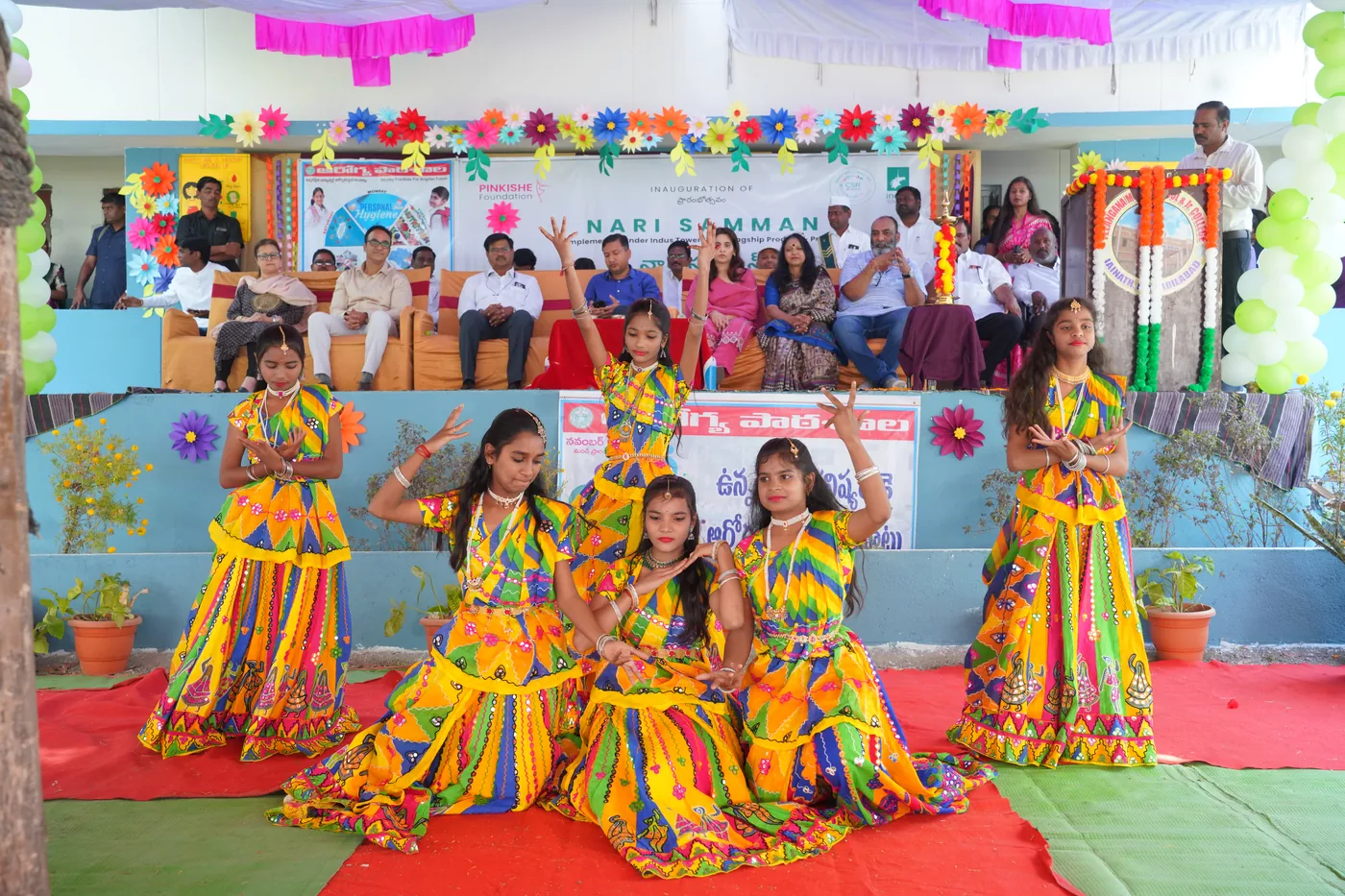
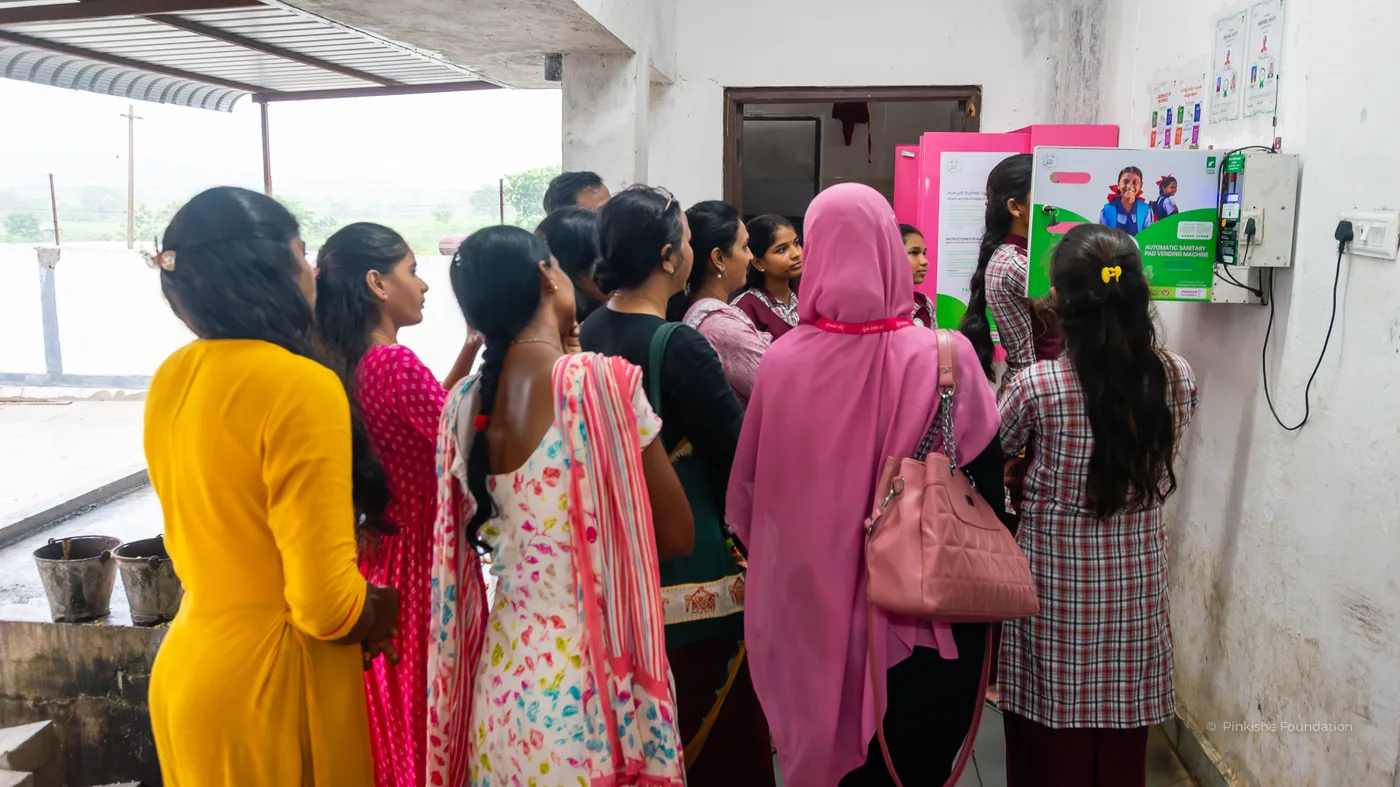
Girls, teachers and machines in the Nari Samman schools of Chhattisgarh and Telangana.

.webp)

The commitment is there. What breaks is the last mile, month after month.
And nobody follows up.
And nobody tracks refills.
So girls stay away.
But have no routine.
Because nobody watches.

What we found ourselves. In five districts, machines installed earlier by others were broken, locked away or never used. Equipment alone does not work. A system does.
Pinkishe Foundation, Nari Samman baseline report, 2025. The full picture of the problem →
So she has dignity, confidence and support she can rely on every month.
.webp)
A vending machine, a pad cupboard and safe disposal in every school: the menstrual hygiene part of WASH in schools.
.webp)
Regular, age-appropriate sessions that bust myths, not one-off talks.

Sakhi peer champions and a trained Saarthi, a teacher who volunteers to lead menstrual health, in every school.

Parents, boys and frontline workers, reached through workshops and plays.
.webp)
Every machine on a live dashboard, with alerts and field follow-up.
Access → Awareness → School ownership → Family and community → Reliable monthly support → Dignity
The same package, monitoring and reporting in every district.
Approvals, a district nodal officer, schools chosen together.
Machines, pad cupboards, disposal, a Saarthi and Sakhis.
Girls’ sessions start, and school routines begin with them.
Every machine tracked live, with alerts and field follow-up.
Deeper engagement and stronger reviews with the district.
Ownership moves steadily to the schools and the district.
Swipe to see all six →
Put the backbone in place.
Make it deeper.
Move to lasting local ownership.
A partner may begin with one year. The full model runs for three.
A system that keeps working after the project team steps back.
Pads when they need them, less fear, fewer school days lost.
Teachers ready to help, with clear routines every month.
Informed parents, and much less silence around periods.
A working system the district can see, review and own.
In his own words, recorded in Adilabad in May 2026.
“The attendance level of the girls has increased. In many schools we have clearly seen the results.”
Shri Rajarshi Shah, IAS, District Collector, Adilabad, Telangana
 “The attendance level of the girls has increased. In many schools we have clearly seen the results.”Rajarshi Shah, IASDistrict Collector, Adilabad, Telangana▶
We track every machine live, and report what did not work as well as what did.
Every programme is shaped to its place and its partner. The discipline behind it stays the same: written processes, trained people, and a live tracker updated within 48 hours. See how we deliver →
Budget allocation will also come… But until then, we seek the support of good NGOs, such as Pinkishe Foundation, with CSR support.
Shri Rajarshi Shah, IAS
District Collector, Adilabad, May 2026
Watch the full interview →It fits Schedule VII, the Sustainable Development Goals and the aspirational districts priority.
You choose the size: 25, 50 or 100 schools, or every school in a district. The same model at every size.
Every district is different. Tell us about yours and we will share a costed plan. For a sense of scale, see the indicative costs of the school model.
.webp)


.webp)

.webp)
.webp)
.webp)

.webp)
.webp)
%20(2).webp)


.webp)
In-kind supporters
Who have given sanitary pads for our work.
Pinkishe Foundation’s three-year model that makes menstrual health support reliable in every government school in a district.
Schools Supporting Menstrual Dignity.
Shakti Shala is a structured, three-year district model. PadBank is a shorter programme of menstrual education and free pads, which companies and individuals can both support.
Government schools with classes 6 to 12, chosen together with the district administration.
It aligns with Schedule VII of the Companies Act, including preventive health care and sanitation, education, and gender equality. Your CSR committee and advisers confirm eligibility for your company.
Yes. Each partner names its project, and the project page shows which parts of the model it delivered.
With a baseline, midline and endline using the same tools, plus live data from every machine.
Teachers and Sakhis stay in every school, the district is involved from day one, and the model is designed so public systems can carry the supply.
You choose: 25, 50 or 100 schools, or every government school in a district. The model is the same at every size.
They are our priority, because the need is greatest. We also work in any district a partner chooses.
Yes, in age-appropriate sessions, because their understanding makes school safer for girls.
