Pinkishe Foundation

31/10/2026
Dr. Shehla Jamal

At the chemist's counter, the choice can feel confusing. Pads, cups, discs, tampons, period underwear: which one is right for you? The best product is the one that keeps you comfortable, fits your budget and suits your day. Many girls and women use more than one, for example a pad at night and a cup in the day.
Want to see them side by side? Our period product comparison puts pads, cloth pads, cups and more next to each other.
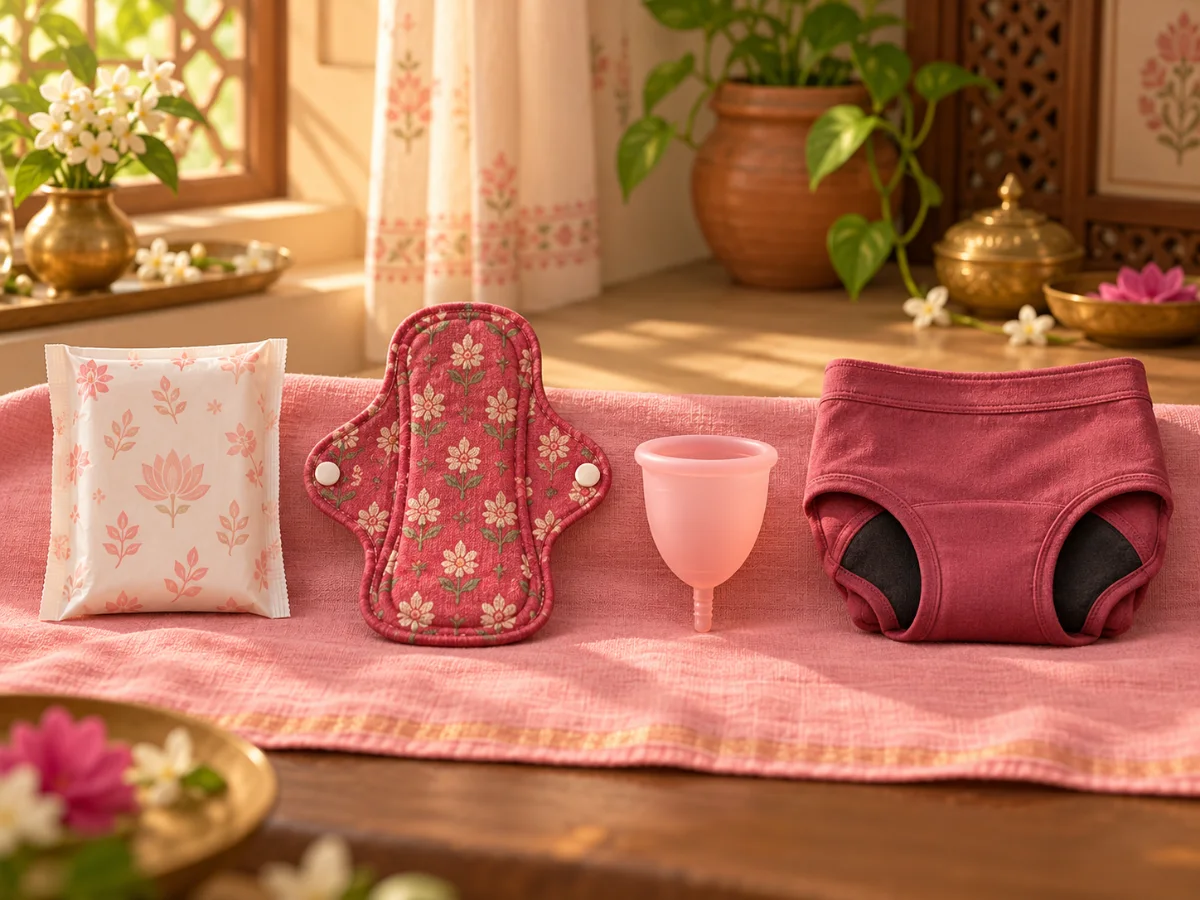
Reusable cloth pads are washed and used again. They are a safe choice when they are washed with soap and water and dried fully in sunlight. Store them clean and dry, and replace them when the fabric wears thin. Pinkishe gives cloth pads, as well as other products, to girls in the communities where it works.
Pros: low cost over time, less waste, soft on the skin. Cons: need water, soap and a sunny place to dry; can feel bulky at first.
Disposable pads are easy to find and easy to use. Change your pad every 4 to 6 hours, and more often on heavy days. Wrap a used pad in paper and put it in a bin. Never flush it.
Pros: simple, no washing needed. Cons: you keep paying for them, and they add to waste.
A cup is a small, soft cup, usually made of medical grade silicone. It sits inside the vagina and collects blood rather than soaking it up. Empty it at least every 12 hours, and more often on heavy days. Rinse it and put it back. Between periods, boil it in water to clean it. Cups come in different sizes, so check the size guide on the pack.
If you have a copper-T or another IUD, talk to your doctor before using a cup, because the suction when you remove it can move the device.
Pros: lasts for years, holds more than a tampon, less waste. Cons: takes practice, needs clean water.
A disc is a flat, flexible ring with a soft pouch. It sits higher in the vagina and collects blood. Many people find discs comfortable once they are placed correctly. Follow the pack's advice on how long to wear one, and never more than 12 hours. Disposable discs add to waste; reusable ones are available.
Pros: holds a lot, comfortable once placed. Cons: takes practice, can be messy to remove.
A tampon is a small plug of absorbent material that goes inside the vagina. Change it every 4 to 8 hours and never leave it in for more than 8. Use the lowest absorbency you need. Organic tampons avoid dyes and fragrance, which some people prefer. They carry the same safety precautions as any tampon.
Pros: small, good for swimming and sport. Cons: you keep paying for them, they add to waste, and they need regular changing.
Liners are thin pads for the lightest days, or as a back-up with a cup. You do not need one every day. Some white discharge between periods is normal, and clean cotton underwear is enough. If you use liners, change them often.
Pros: thin, comfortable, low cost. Cons: not enough for most period days, and they add to waste.
Period underwear looks like regular underwear but has absorbent layers built in. Change it when it feels full, and more often on heavy days. Rinse it in cold water, wash it as the label says, and dry it fully, in sunlight if you can.
Pros: reusable, comfortable, less waste. Cons: higher cost at first, and it needs washing and drying.
Toxic shock syndrome (TSS) is a rare but serious illness linked to products worn inside the vagina. To lower the risk, change a tampon every 4 to 8 hours, use the lowest absorbency you need, and empty a cup or disc at least every 12 hours. Wash your hands before and after. If you get a sudden fever, rash, vomiting or dizziness while using a tampon, cup or disc, remove it and see a doctor at once.
Using a cup or tampon does not change whether a girl is a virgin.
Have a question about period products? Call our menstrual helpline on 85888 70999. It answers at any hour.
A simple printable sheet that marks your period days, your fertile window and your ovulation day. We will email it to you now.
We will send the tracker and a few gentle menstrual health emails from Khyati at Pinkishe. No spam, unsubscribe any time.
Prefer to work out your dates now? Open the free ovulation calculatorReusable products: cloth pads, menstrual cups, reusable discs and period underwear. They cut waste because you use them again and again.
Yes. A cup holds more than a tampon. On heavy days, empty it more often, and always at least every 12 hours.
Yes. Wash them with soap and water, dry them fully in sunlight, and store them clean and dry.
Yes, when they feel ready. Start with the smallest cup size or the lowest tampon absorbency, and follow the instructions on the pack.
Change a pad every 4 to 6 hours. Change a tampon every 4 to 8 hours, never more than 8. Empty a cup or disc at least every 12 hours.
There is no single best period product. Choose the one that suits your flow, budget and day, follow the changing times, and see a doctor at once if you feel suddenly unwell while using a tampon, cup or disc.
Pinkishe Foundation is a specialist implementation organisation for menstrual health. We deliver, reliably, in schools and communities across India. Support our work with a donation.
₹1,100 gives one girl a year. Donations are eligible for deduction under Section 80G.