Pinkishe Foundation is a specialist implementation organisation for menstrual health. We deliver, reliably, in schools and communities across India. Here is how we make sure of it, from choosing a school to the data on your screen.
Classes and districts since 2017, as of 30 September 2026 · Tracker updated within 48 hours on every project
Two of our trustees spent long years in large multinationals, and one in education. They brought that discipline with them.
So every programme runs on written processes, clear roles, regular reviews and data you can check. That is what makes our work repeatable, and ready to grow with a partner.
President
Built systems and processes at SGS, IBM, Amdocs, HCL, InterGlobe and R Systems. As an Associate Director at Dell Perot Systems, he headed its Quantitative Management and Operational Excellence work. Today he leads Pinkishe, bringing the same process rigour to all our work, from choosing schools to checking every session.
Treasurer
Holds a Master of Computer Applications. Worked in IT for many years, the longest at TCS, and also at Amdocs and HCL Perot Systems. Today she oversees our finances and the technology behind our work.
General Secretary
Brings long experience in the education sector, including teaching children in slums. Today she leads the design and delivery of our programmes on the ground, working closely with education departments and government systems.
Every district is chosen with care, and every school is visited and agreed before the work begins.
We prioritise India's aspirational districts, where the need is greatest, and we work wherever a partner wants to make a difference. We choose with our partner, sometimes in its own priority area, sometimes in states and districts where national surveys show menstrual health lags furthest behind.
We begin with the district administration, and through them the education department.
From the full list of schools, the department and the nodal officer help us find those with more girls and the greatest need.
Before we start, our team visits each school and records what the work will need. Each school names its Saarthi, the teacher who leads menstrual health in the school and our single point of contact.
We meet each principal, because the work lasts only if the school wants it.

Four habits keep a district programme on track.
We sign an MOU with the district administration, and bring in the departments the work needs, such as education and health.
The district names a nodal officer, who helps us coordinate the work across the district: finding resources, identifying schools, and bringing in Anganwadi and ASHA workers.
We send the district administration regular reports on our work, with progress, issues and next steps, so they always know where things stand.
In our district programmes, we hold review meetings, usually every quarter. We look at progress, discuss bottlenecks and agree how to improve outcomes.
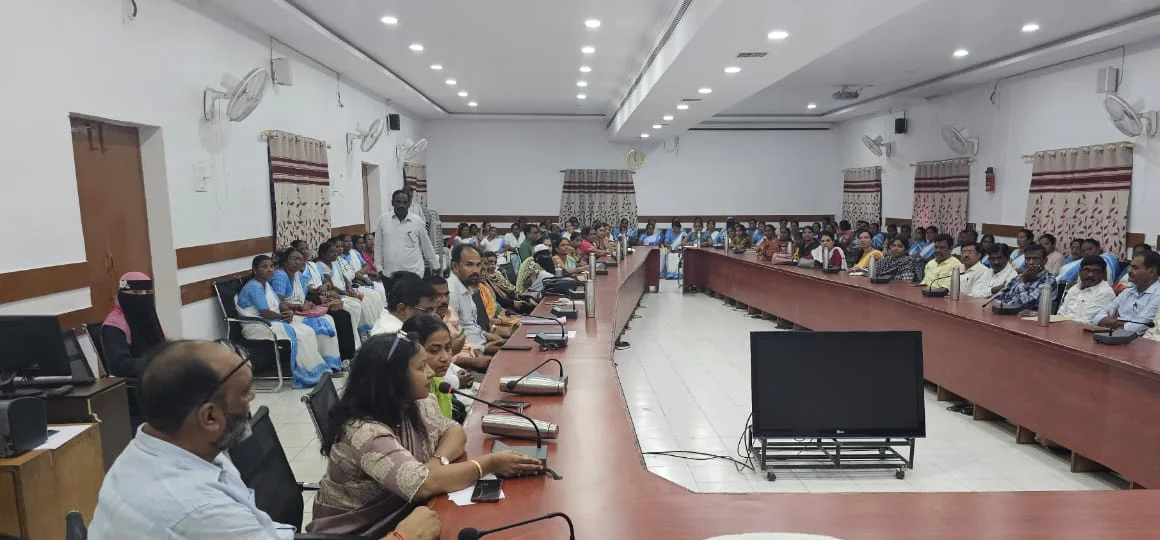
Adilabad, Telangana. A district review meeting held under the leadership of the District Collector. Around the table: the district administration, the education and health departments, ASHA and Anganwadi workers, school principals, Saarthis, School Sakhis, and our local and central teams.
No one goes into the field before that day.
We identify and select candidates, often women from the community.
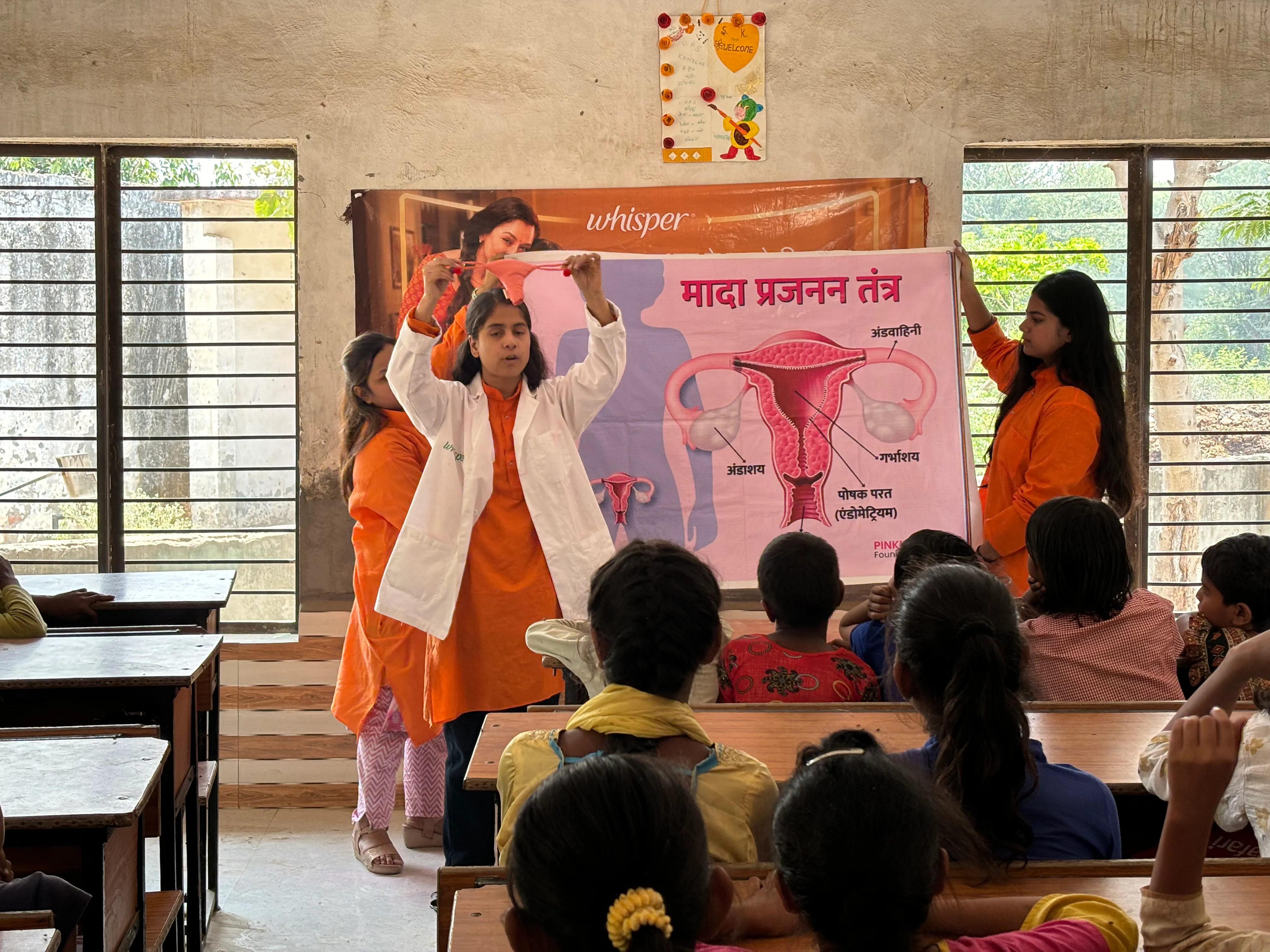
A master educator leads a course, with content we have carefully prepared.
Each candidate takes a knowledge test.
In the field, she watches a master educator run real sessions.
She runs sessions while the master educator watches. Feedback, improvement and mock sessions follow.
Only when the master educator approves her does she run sessions on her own.
Master educators review each educator in the field every few months, with feedback and support.
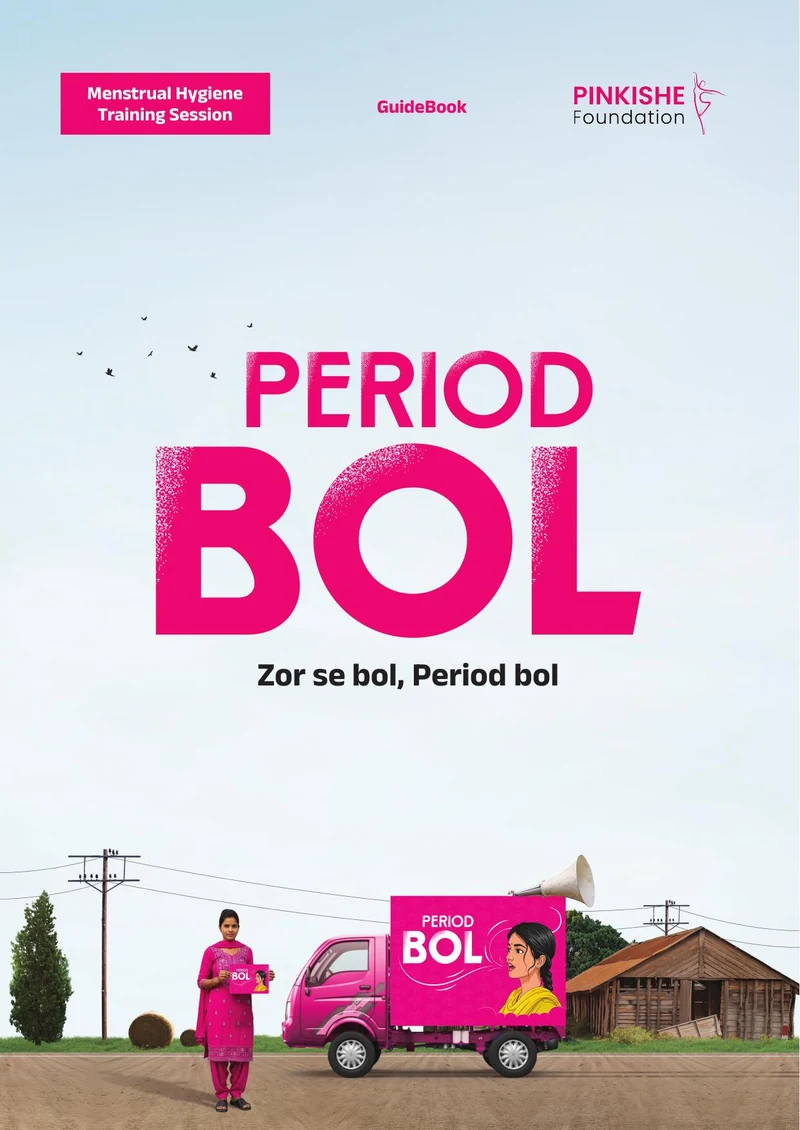
Guidebook, English
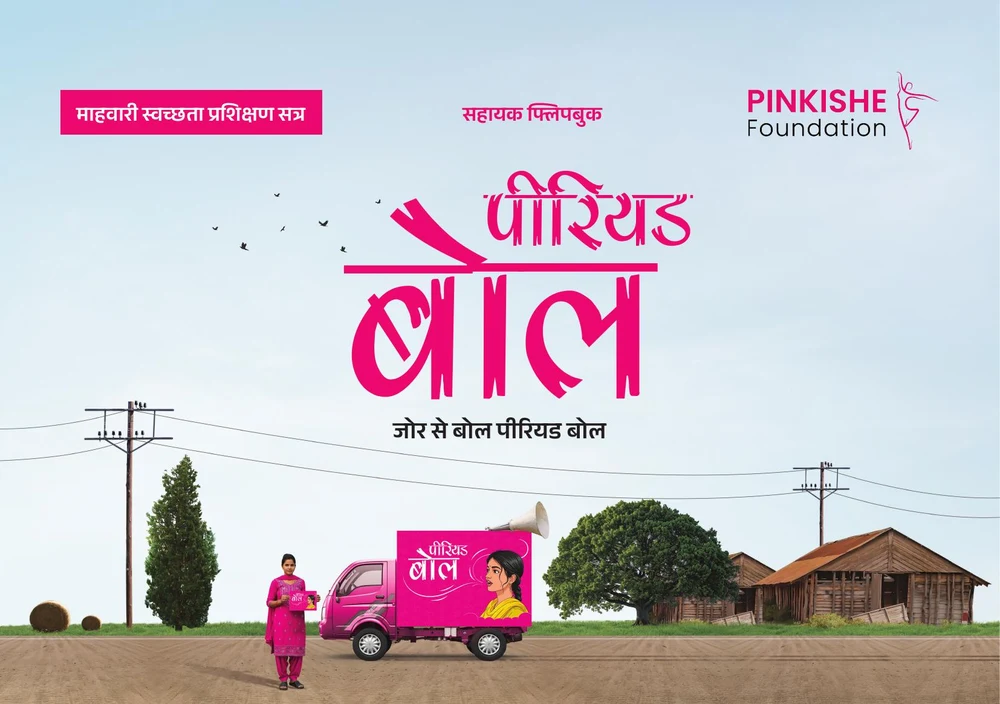
Flipbook, Hindi
Our flipbook and guidebook are in Hindi, English and local languages such as Telugu, so every session is taught the same way, wherever it is held.
Our field teams come from the districts we work in. Our central team makes sure the work is done the same way everywhere.
In the district
We hire and train people from the communities we serve. They know the language and the customs.
Educators from the area run the sessions, once a master educator has approved them.
In our school programmes, a local officer repairs the machines, keeps spares, restocks pads and audits the stock.
In each school, a teacher who volunteers as Saarthi leads the work, helped by School Sakhis from classes 9 or 11.
Our central team, based in Delhi
Each programme has a project manager. Coordinators, with us for years, report to them and watch the field every day.
Data from every location comes to the central team, which tracks and compares it across districts.
Our MEL team runs the baseline, midline and endline, and checks what the numbers are telling us.
Monthly reports, a management review, and a quarterly steering meeting with a financial summary and utilisation statement.
Six steps, from the educator's phone to your tracker.
Step 1
After each session, the educator uploads attendance, feedback, GPS-tagged photos and videos through a simple digital form.
Step 2
The coordinator checks each session: numbers against photos, time stamps, feedback and the observer's view.
Step 3
Coordinators call the observer, the school or the ASHA worker from time to time.
Step 4
An automatic system files every record in a named folder.
Step 5
The MEL team updates the project's master tracker.
Step 6
Partners see the tracker live, at any time.
The records behind the numbers on your tracker.
Who came, and their age.
Signed and stamped by the school, or by the ASHA or Anganwadi worker.
An observer scores the session, the tools and the educator's method.
Girls and women chosen at random tell us what they understood.
Checked before, during and after each session.
Every box of pads and every piece of material, signed for when it arrives.
Recorded only with her consent, and kept confidential.
The school agrees in writing first, and any girl can say no.
Our coordinators watch the ratings from every session, so a weak session is caught quickly.
Locked down, backed up, and checked by a person before anything goes out.
Every record sits in one secure workspace, open only to those who need it, and backed up regularly.
Almost everyone on our team works with AI every day, and it keeps us lean. We never put the personal details of the girls and women we serve into AI tools, and a person checks everything before it goes out.
We plan for the problems before they happen.
A machine breaks down.
→A local District Support Officer, with spares to hand, repairs it.
Pads run out.
→The District Support Officer restocks the pads and audits the stock on site.
An educator leaves.
→We hire locally again, and our master educators train and approve a replacement.
Holidays or exams get in the way.
→The school survey records the calendar, so we plan sessions around it.
A session is weak, or looks doubtful.
→Same-day uploads, desk audits and spot calls catch it.
A school or district loses interest.
→The MOU, the nodal officer, the Saarthi and the review meetings keep everyone committed.
The full record is on our Governance page.
Every payment goes digitally to a named bank account, and every expense needs at least two levels of approval. Zero cash. Each funder's money is tracked separately in our books. We work hard to keep administration under 5 per cent of our expenses. In FY 2025-26, it was 4.28 per cent.
See how we are governed →Our accounts have been audited every year since FY 2017-18. A registered social impact assessor, independent of Pinkishe, also assesses our work each year under SEBI's Social Stock Exchange rules. CAF and Give each review us every two years, and project monitoring partners follow our work.
See every check →Tell us where you want to make a difference. We will show you how we would run it, and how you would see every step.
Partner with usSee Shakti ShalaOr write to info@pinkishe.org
