Pinkishe Foundation

31/10/2026
Dr. Shehla Jamal

A menstrual cup is a small, bell-shaped cup that sits inside the vagina during your period. Most are made of medical-grade silicone. Some are made of rubber or another soft material called elastomer. A cup collects blood instead of absorbing it, and many girls and women find it comfortable once they get used to it.
With good care, one cup can be used for several years. This saves money and cuts waste. But a cup takes some practice, so give yourself two or three cycles to get used to it.
Many girls and women use cups. Others prefer pads, disposable or cloth, and that is fine too. Pick the product that feels right for you.
If you have a copper IUD (Copper-T), talk to a doctor before you start using a cup. A cup does not prevent pregnancy and does not protect against infections passed on through sex.
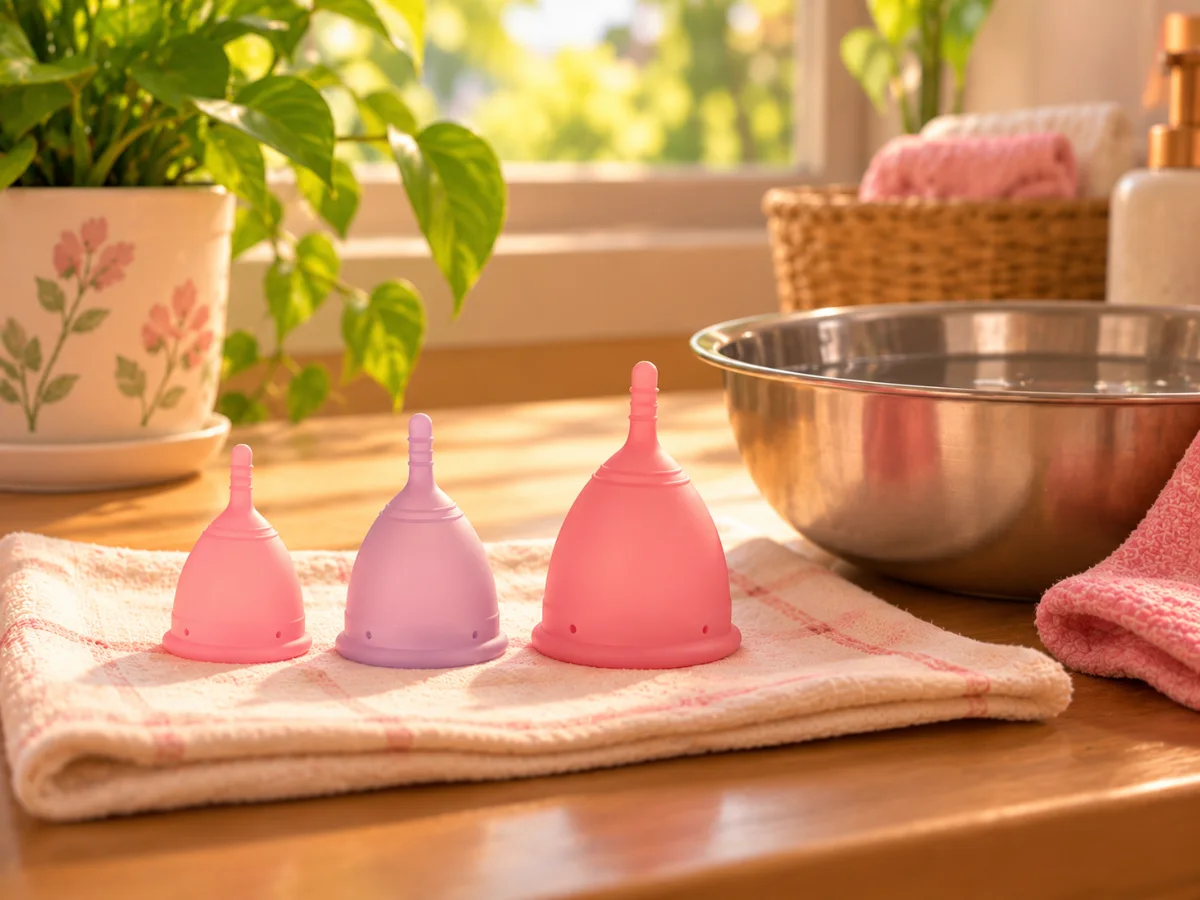
Most cups come in two or three sizes. Smaller cups often suit younger users and those who have not given birth vaginally. Larger cups often suit those who have given birth vaginally or have a heavier flow. If your flow is heavy, choose a larger capacity, or plan to empty the cup more often.
The cervix is the lower end of the womb, at the top of the vagina. During your period, wash your hands and gently insert a clean finger until you feel something firm, like the tip of your nose. If you reach it easily, your cervix is low and a shorter cup may be more comfortable. If you can hardly reach it, your cervix is high and a longer cup may suit you better.
Some cups are rounder and bell-shaped. Others are longer and narrower, in a V shape. Length and firmness matter more than shape, so choose the one that feels comfortable.
Choose a cup made of medical-grade silicone from a brand that lists its sizes clearly. If you have a latex allergy, avoid cups made of natural rubber.
Cups carry a very small risk of toxic shock syndrome, a rare but serious infection. Take the cup out and see a doctor at once if you get a sudden high fever, vomiting, a sunburn-like rash, or feel faint.
If you have ever had toxic shock syndrome, do not use a cup. Talk to a doctor about other options.
Have a question about cups or your periods? Call our menstrual helpline on 85888 70999. It answers at any hour.
A simple printable sheet that marks your period days, your fertile window and your ovulation day. We will email it to you now.
We will send the tracker and a few gentle menstrual health emails from Khyati at Pinkishe. No spam, unsubscribe any time.
Prefer to work out your dates now? Open the free ovulation calculatorThink about your flow, your cervix height and whether you have given birth vaginally. Smaller cups often suit younger users and lighter flows. Larger cups often suit heavier flows.
Yes. A longer cup may be more comfortable. Check your cervix height during your period to choose the right length.
It may be sitting too high or too low, or be the wrong size or firmness. A softer cup may help if you have a sensitive bladder. If it is painful, stop and see a doctor.
Empty it at least every 12 hours, and more often on heavy days. Wash it with clean water and mild, unscented soap. Boil it for a few minutes before and after each period.
Talk to a doctor first. The suction from a cup can pull on the threads, so a doctor can tell you whether a cup is safe for you.
The best cup is the one that fits your body and your flow. Choose medical-grade silicone, match the length to your cervix, empty it at least every 12 hours, and know the signs of toxic shock syndrome.
Pinkishe Foundation is a specialist implementation organisation for menstrual health. We deliver, reliably, in schools and communities across India. Support our work with a donation.
₹1,100 gives one girl a year. Donations are eligible for deduction under Section 80G.