Pinkishe Foundation

31/10/2026

Most people who have periods are girls and women. But not everyone who has periods is a woman. Some non-binary people and some trans men have periods too. For many of them, a period is not only a physical event. It can also bring up hard feelings about their body and who they are.
This post explains those feelings in simple words, shares practical ways to cope, and suggests how families, friends, schools and workplaces can support everyone who menstruates.
In most homes, schools and advertisements, periods are linked with being a girl or a woman. Pads come in pink packets. Lessons on periods are "for girls only". For someone who is not a woman, each period can feel as if the body is saying something untrue about them. This can make dysphoria worse, sometimes for days.
Being called by the wrong name or pronoun adds to the hurt. And there are practical problems too:
In India, the Transgender Persons (Protection of Rights) Act, 2019 protects the right to health care without discrimination.
There is no right or wrong product. Some people find a menstrual cup or period underwear less upsetting than pads, because there is less to see and handle. Others prefer reusable cloth pads in plain or dark colours. Disposable pads are fine too. Try what suits you. Our guide to choosing a period product compares the options.
Whatever you use, change it on time. Change a pad every 4 to 6 hours. Change a tampon every 4 to 8 hours, and never leave one in for more than 8. Empty a cup at least every 12 hours.
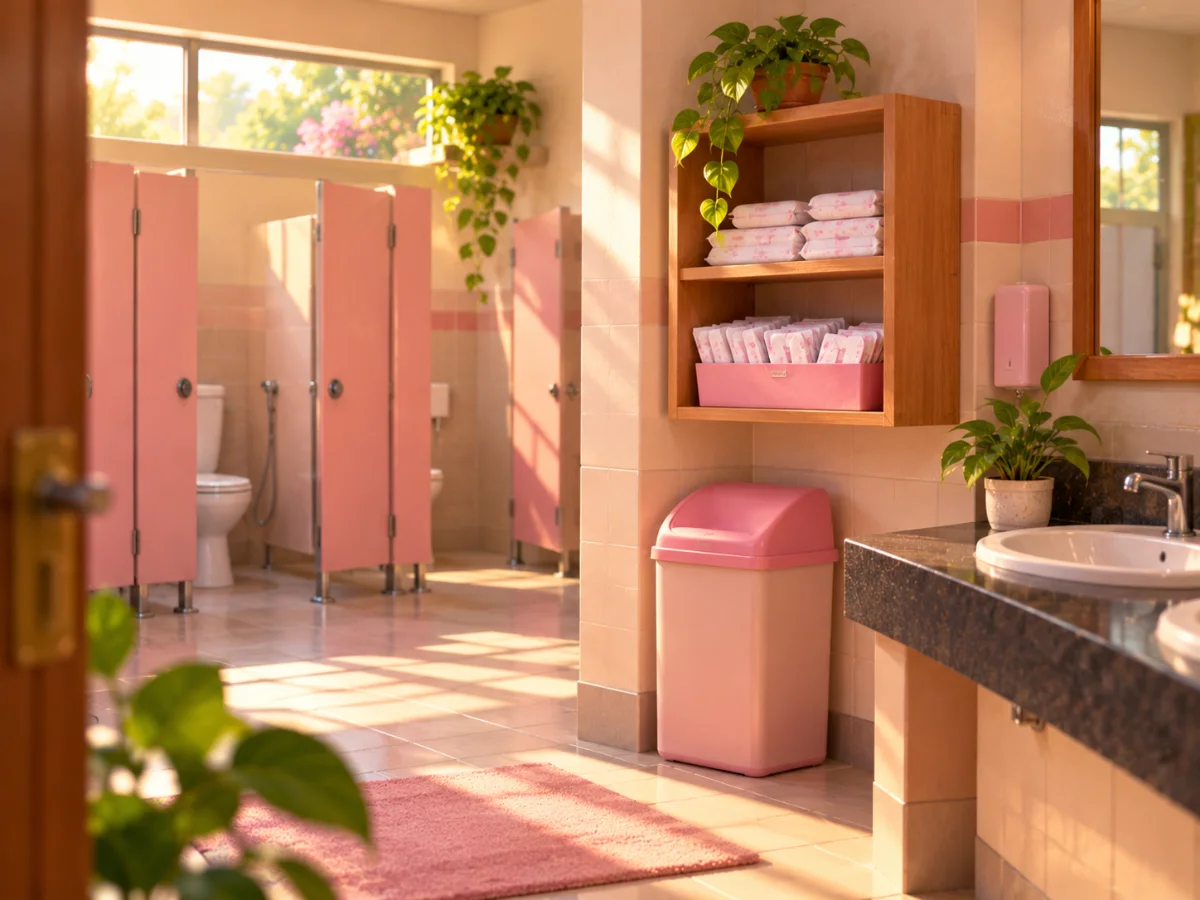
Keep a pouch with products, a little paper or a small bag to wrap used ones, and a spare pair of underwear. If the toilet you use has no bin, wrap the used product and carry it out to throw away later. Never flush pads or tampons.
Some people say "period". Others prefer "my cycle", "bleeding" or a word of their own. Use whatever word feels comfortable, and ask the people close to you to use it too.
A hot water bag on the tummy or lower back, rest and gentle movement help many people with cramps. Ask a doctor or pharmacist which painkiller is right for you.
Clothes that affirm your gender can help you feel more like yourself on hard days. If you bind, use a binder made for it, never tape or bandages, take breaks, and do not bind for more than eight hours or while you sleep.
Some hormonal medicines can make periods lighter, or stop them for a while. Gender-affirming hormone therapy also changes periods for many people. These are choices to make with a doctor you trust, who respects your identity. Do not start or stop any hormone on your own. Hormone therapy is not a form of contraception, so if pregnancy is possible, ask the doctor about that as well.
Talking to a friend, a family member or others who understand can make a big difference. You are not alone, and your period does not define your gender.
If you ever feel hopeless or have thoughts of harming yourself, please talk to someone today. Call Tele-MANAS, the government's free mental health helpline, on 14416 or 1-800-891-4416, at any hour. In an emergency, call 112.
Last reviewed: October 2026.
Have a question about periods and gender identity? Call our menstrual helpline on 85888 70999. It answers at any hour.
A simple printable sheet that marks your period days, your fertile window and your ovulation day. We will email it to you now.
We will send the tracker and a few gentle menstrual health emails from Khyati at Pinkishe. No spam, unsubscribe any time.
Prefer to work out your dates now? Open the free ovulation calculatorNon-binary people do not see themselves as only a man or only a woman. They may feel they are both, neither, or a different gender altogether.
Yes. A trans man was assigned female at birth, so many trans men have periods for at least part of their lives. Hormone therapy changes periods for many people, but this is a decision to make with a doctor.
Try products that suit you, such as a cup, period underwear or plain cloth pads. Use words that feel right, wear clothes that affirm your gender, carry a small kit, and talk to people who understand.
If you bind, use a binder made for it, never tape or bandages, take breaks, and do not bind for more than eight hours or while you sleep. See a doctor if binding causes pain, breathing trouble or sore skin.
Use their name and pronouns, do not make jokes or ask personal questions, and help them find a toilet with a bin. Simply listening helps a great deal.
Periods can be hard for non-binary people and trans men, because they are so often linked with being a woman. The right products, kind words, safe binding and a respectful doctor all help. Periods should be safe and free of shame for everyone who menstruates.
Pinkishe Foundation is a specialist implementation organisation for menstrual health. We deliver, reliably, in schools and communities across India. Support our work with a donation.
₹1,100 gives one girl a year. Donations are eligible for deduction under Section 80G.