Pinkishe Foundation

31/10/2026
Dr. Shehla Jamal

Ovulation is when one of your ovaries releases a mature egg. The egg travels down the fallopian tube towards the womb (uterus). It lives for about a day. If sperm meet it in that time, it can be fertilised.
Ovulation usually happens about 12 to 16 days before your next period. In a 28-day cycle, that is around day 14. In shorter cycles it comes earlier, and in longer cycles it comes later.
Not everyone notices these signs, and that is normal.
Day 1 of your cycle is the first day of your period. The days below are for a 28-day cycle. Your own days may be different, and they can change from month to month.
The lining of the womb sheds and leaves the body as your period.
This phase starts on day 1, so it includes your period. Oestrogen rises, the womb lining builds up again, and an egg matures in the ovary. This phase varies the most in length. It is the main reason cycle lengths differ from person to person.
A surge of a hormone called LH (luteinising hormone) makes the ovary release the egg. In shorter cycles ovulation comes earlier, and in longer cycles it comes later.
Progesterone rises to prepare the womb lining. If there is no pregnancy, hormone levels fall at the end of this phase and your next period begins. This phase usually lasts about 14 days.
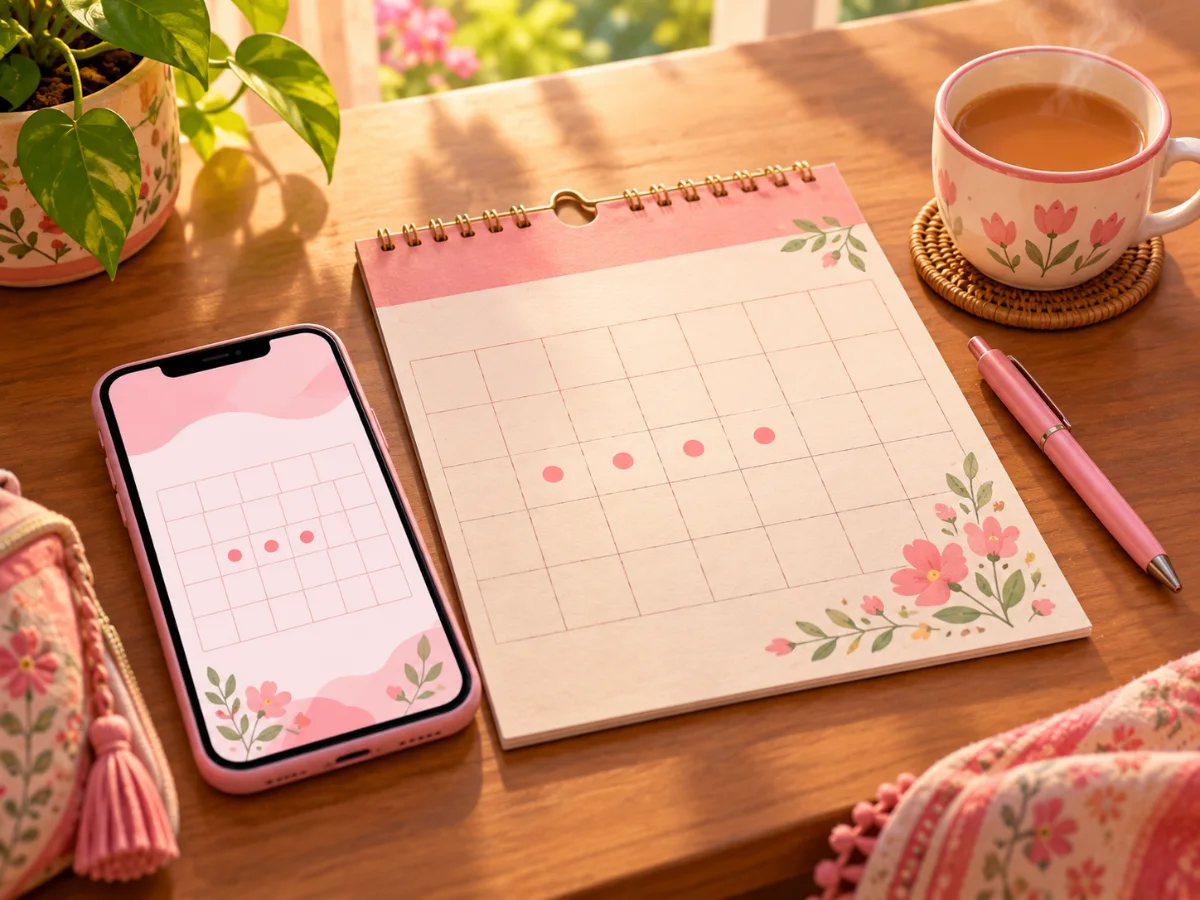
A calculator uses the first day of your last period and your usual cycle length. It counts back about 14 days from your expected next period to estimate ovulation. It then marks the fertile window: the five days before ovulation and the day of ovulation itself. This is because sperm can live in the body for up to five days.
This is an estimate only. A calculator cannot see what your body is doing this month. It works best when your cycle is regular.
You can try our free ovulation and period calculator. Enter the first day of your last period and your usual cycle length. It gives you an estimate of:
If your cycle length changes a lot from month to month, a calculator's dates are less reliable. Other signs can help you understand your cycle:
Irregular cycles are common in the first few years after periods start, and in the years before menopause. At other times, they can be a sign of PCOS, a thyroid problem or another condition, so it is worth seeing a doctor.
No. Some people call the days furthest from ovulation "safe days". But no day of the cycle is fully safe. Ovulation can come early or late in any month, even if your cycle is usually regular. Sperm can also live for up to five days. So pregnancy can happen on a day that a calculator, an app or a chart calls "safe".
Do not use a calculator, an app or a calendar to avoid pregnancy. If you want to avoid pregnancy, talk to a doctor or your nearest government health centre about contraception.
Have a question about your cycle or ovulation? Call our menstrual helpline on 85888 70999. It answers at any hour.
A simple printable sheet that marks your period days, your fertile window and your ovulation day. We will email it to you now.
We will send the tracker and a few gentle menstrual health emails from Khyati at Pinkishe. No spam, unsubscribe any time.
Prefer to work out your dates now? Open the free ovulation calculatorIt gives a good estimate if your cycle is regular. If your cycle is irregular, treat the dates as a rough guide only, and see a doctor if you need to be sure. You can start with our ovulation and period calculator.
It is the five days before ovulation and the day of ovulation. These are the days when pregnancy is most likely, because sperm can live for up to five days.
No. Ovulation can shift from month to month, so no day is fully safe. If you want to avoid pregnancy, talk to a doctor about contraception.
Usually about 12 to 16 days before your next period. In a 28-day cycle, that is around day 14. It comes earlier in shorter cycles and later in longer ones.
Some girls and women notice clear, stretchy discharge or a mild one-sided ache. Many notice nothing, and that is normal. Severe pain needs a doctor's check.
Ovulation usually comes 12 to 16 days before your next period. A calculator can help you understand your cycle and plan for your period, but it gives an estimate only. No day is fully safe from pregnancy, so for contraception, talk to a doctor.
Pinkishe Foundation is a specialist implementation organisation for menstrual health. We deliver, reliably, in schools and communities across India. Support our work with a donation.
₹1,100 gives one girl a year. Donations are eligible for deduction under Section 80G.