Pinkishe Foundation

31/10/2026

Period poverty means not being able to manage your period safely and with dignity. It is not only about money for pads. A girl or woman faces period poverty when she does not have one or more of these:
It affects girls and women in cities and villages alike. A girl in a crowded city basti with no private toilet can face it as much as a girl in a village far from a shop.
India has made real progress. 79.2% of women aged 15 to 24 use a hygienic method during their period (NFHS-6, 2023-24). It was 57.6% in NFHS-4 (2015-16) and 77.6% in NFHS-5 (2019-21).
The gap between places is still wide. About 9 in 10 young women in cities use a hygienic method, and about 3 in 4 in villages (NFHS-6).
Knowledge often comes too late. 1 in 2 girls knew nothing about periods before their first, and 1 in 4 girls stay home from school during their periods (BMJ Open review of Indian studies, 2016).
Toilets are another gap. 97.3% of India's schools have a girls' toilet (UDISE+ 2024-25). Yet in 28% of rural government schools, surveyors found no usable girls' toilet, and 22% had no drinking water (ASER 2024).
For a closer look at how period poverty shapes a girl's everyday life, read our post on period poverty and its cost to girls.
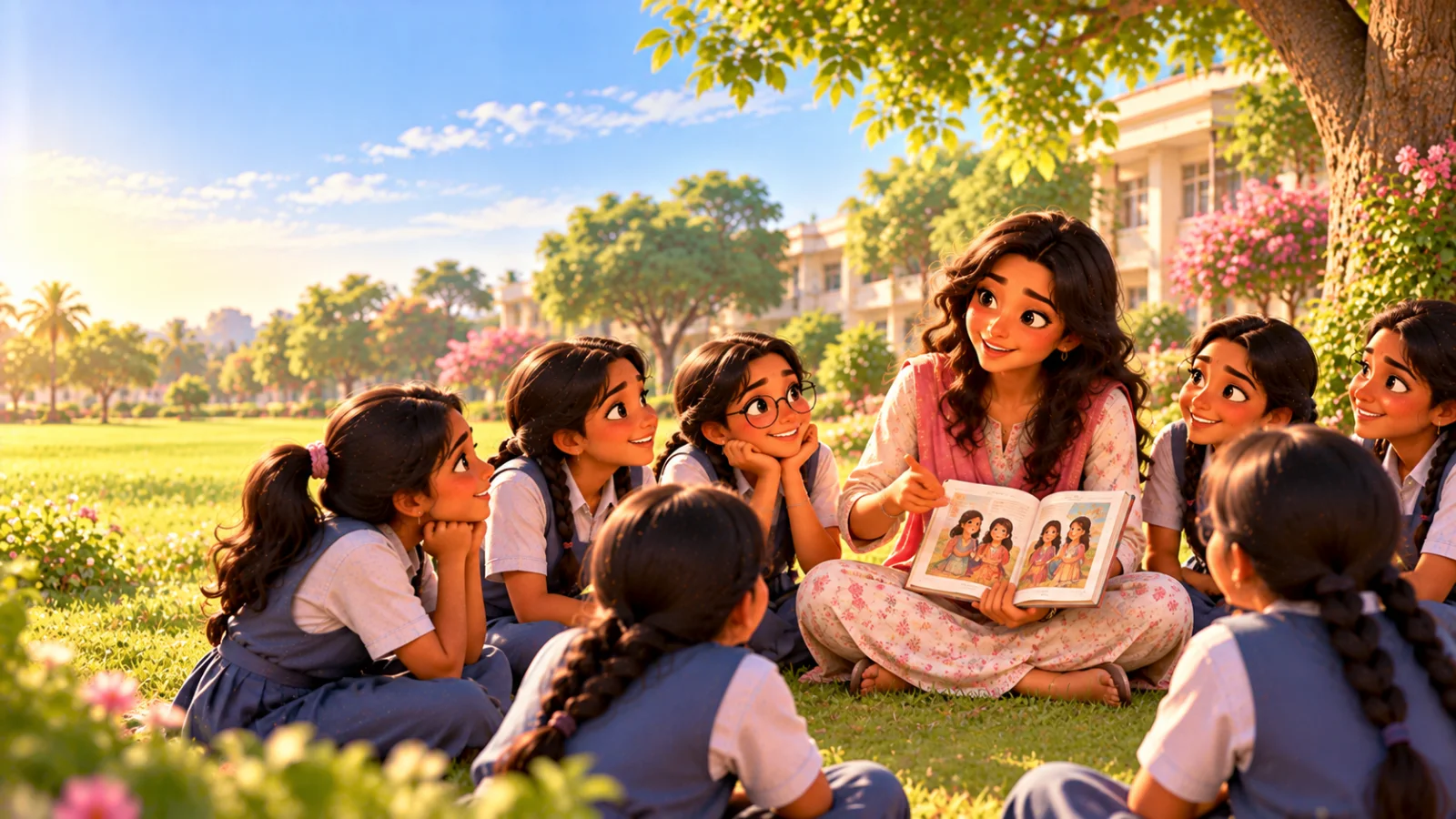
Many girls first hear about periods when the bleeding starts. They may think they are hurt or ill. Often their mothers were told very little themselves, so the silence passes from one generation to the next.
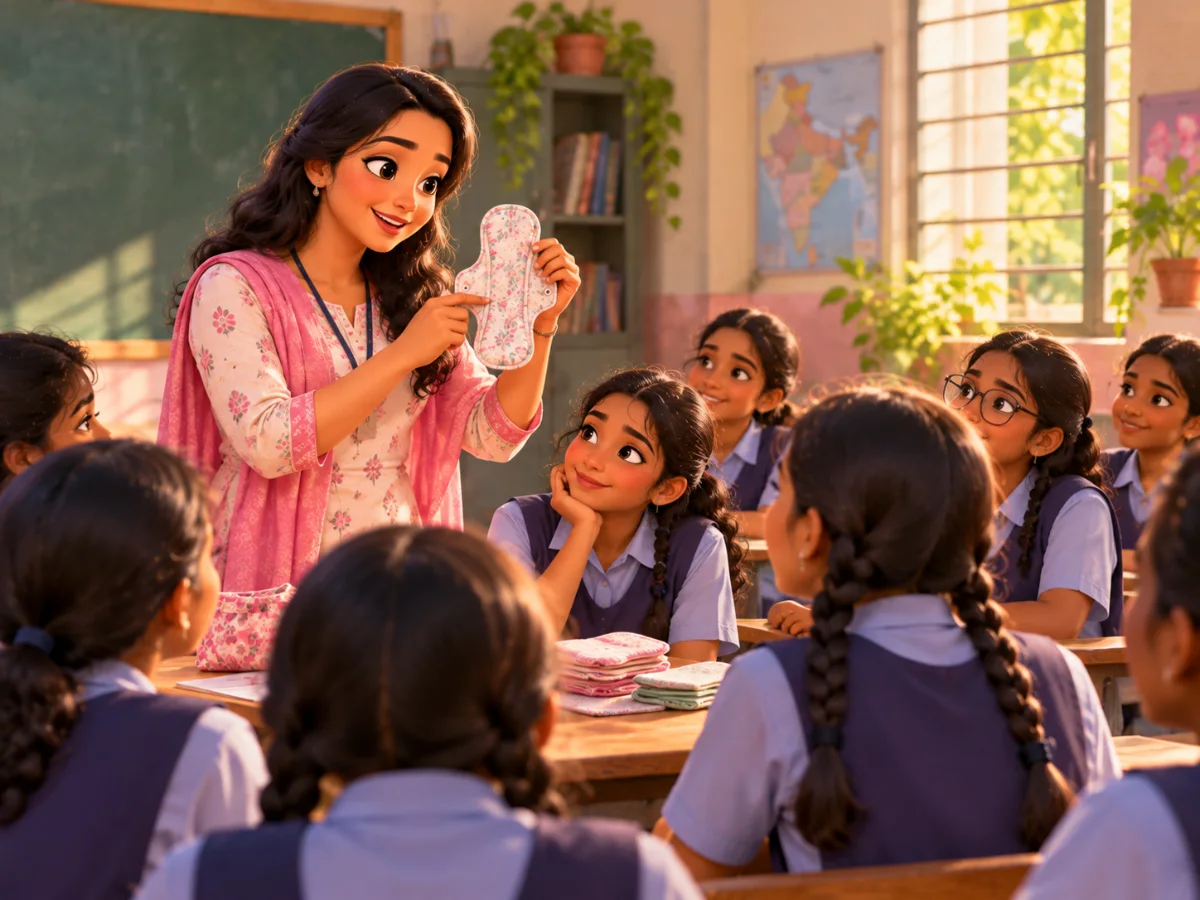
What helps: simple, correct information at home and in school before the first period, for boys as well as girls.
Period blood is not dirty or impure. Yet many girls are told not to enter the kitchen, touch the pickle jar or sleep in the same bed during their period. These rules teach girls to hide, and a girl who hides does not ask for help when something is wrong.
What helps: calm, open talk about periods in families, schools and communities. You can test common beliefs on our menstrual myths and facts page.
When money is tight, pads compete with food, fees and bus fare. Some girls use the same cloth for too long, or cannot dry it properly. Cloth is safe when it is washed with soap and dried fully in sunlight. The problem is not cloth itself. It is the lack of water, soap, privacy and a sunny place to dry it.
What helps: free or low-cost products, and a real choice between disposable and reusable products. Reusable options such as cloth pads, menstrual cups and period panties cost more at first but last a long time.
Without a usable toilet, a girl cannot change her pad at school. She may wait the whole day, or stay at home. Without a bin, used pads are hidden, carried home, or thrown into drains and fields.
What helps: toilets that work, with water, soap, a lock and a covered bin, and a system that collects used products as sanitary waste.
On 30 January 2026, in Dr Jaya Thakur v Government of India, the Supreme Court held that menstrual health is part of the right to life under Article 21. It gave directions for classes 6 to 12 on free products, vending machines, safe disposal, education, teacher training and annual inspection. In an order of 1 September 2026, the Court set the standard as compostable products meeting ISO 17088 read with IS 5405, and directed states towards reusable cups, period panties and reusable napkins.
This means that governments and schools now carry a clear duty towards girls in classes 6 to 12. Families and teachers can ask their school how it is meeting these directions.
Last reviewed: October 2026.
Have a question about periods or period products? Call our menstrual helpline on 85888 70999. It answers at any hour.
A simple printable sheet that marks your period days, your fertile window and your ovulation day. We will email it to you now.
We will send the tracker and a few gentle menstrual health emails from Khyati at Pinkishe. No spam, unsubscribe any time.
Prefer to work out your dates now? Open the free ovulation calculatorIt means not being able to manage your period safely and with dignity, because you lack products, a usable toilet, water, safe disposal or correct information. It is about much more than the cost of pads.
Things are improving. 79.2% of women aged 15 to 24 use a hygienic method during their period (NFHS-6, 2023-24), up from 57.6% in NFHS-4 (2015-16). But about 3 in 4 young women in villages use one, against about 9 in 10 in cities (NFHS-6).
No. Cloth is safe when it is washed with soap and dried fully in sunlight. Change it every 4 to 6 hours, as you would a pad, and store clean cloth in a dry place.
Yes, for many girls. 1 in 4 girls stay home from school during their periods (BMJ Open review of Indian studies, 2016). Products, usable toilets and good information all help girls stay in class.
The Menstrual Hygiene Scheme began in 2011, sanitary napkins were made free of GST in July 2018, and on 30 January 2026 the Supreme Court held that menstrual health is part of the right to life. It directed free products, safe disposal and education in classes 6 to 12.
Talk openly about periods at home, make sure girls have products before they need them, ask schools about toilets and bins, and support work in schools and communities.
Period poverty means not having the products, toilets, water, safe disposal or information to manage a period with dignity. India has made real progress, but gaps remain between cities and villages, and in school toilets. The answer is to put products, toilets, disposal and education together, and to talk openly.
Pinkishe Foundation is a specialist implementation organisation for menstrual health. We deliver, reliably, in schools and communities across India. Support our work with a donation.
₹1,100 gives one girl a year. Donations are eligible for deduction under Section 80G.