Pinkishe Foundation

31/10/2026
Dr. Shehla Jamal

Yes, a little, and only for a short time. Many girls and women feel heavier and bloated in the days before a period. This is mostly water, not fat. It usually adds about 1 to 2 kg and settles within a few days after the period starts.
It also works the other way round. Losing or gaining a lot of weight can change your cycle. Periods may come late, become irregular, get heavier or stop. This post explains both, and tells you when to see a doctor.
In the week or so before a period, the hormones oestrogen and progesterone rise and then fall. These changes can make your body hold on to more water and salt. Your tummy may feel swollen, your clothes may feel tight, and your breasts may feel full or tender.
The same hormones can slow digestion. Some girls and women feel gassy or constipated before a period, which adds to the bloated feeling. Once the period starts, some get loose motions instead.
Many girls and women crave sweet, salty or fried food before a period. Hormones affect appetite and mood, and your body may use a little more energy at this time. Eating a bit more for a few days is normal. It only adds lasting weight if it becomes a habit through the whole month.
Once your period starts, the extra water passes out and the bloating usually eases within a few days. So the number on the scale just before your period is not your true weight. If you like to weigh yourself, do it at the same point in each cycle, such as just after your period ends.
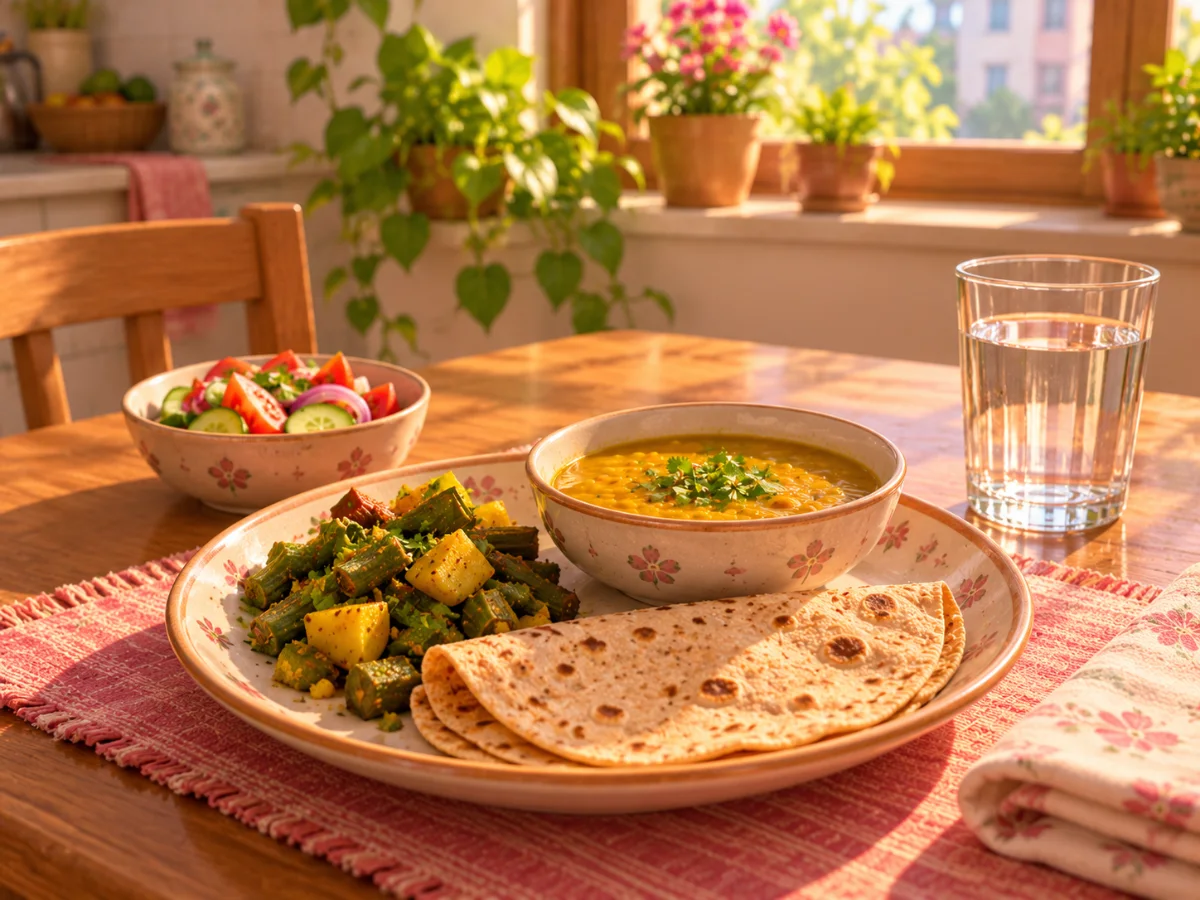
These are comfort measures. They will not stop bloating completely, and that is fine. It passes.
Your periods depend on a careful balance of hormones from the brain and the ovaries. Body fat also makes some oestrogen. So big changes in weight, in either direction, can upset this balance.
If you lose weight fast, eat much less than your body needs, or exercise very hard without eating enough, your brain may switch off the signals that lead to ovulation. This is the body saving energy. Periods may become irregular, get lighter or stop.
When periods stop for this reason, oestrogen stays low. Over time this can weaken bones, especially in teenagers and young women whose bones are still growing.
If you are underweight (for adults, a body mass index or BMI under 18.5; for girls under 18, a doctor checks weight against growth charts for age), getting back to a healthy weight usually helps your periods return. A doctor can guide you on how to do this safely.
This applies only if you are underweight. If your weight is already healthy and your periods are irregular, gaining weight will not fix them. Other causes, such as polycystic ovary syndrome (PCOS), thyroid problems, stress, pregnancy, or not eating enough for how active you are, are more likely. Please see a doctor to find the cause.
If you find yourself skipping meals, cutting out whole food groups, making yourself sick or exercising for hours to lose weight fast, please talk to a doctor or counsellor. Your body needs enough food to keep your periods, bones and mind healthy. Asking for help is a strong thing to do.
Extra body fat makes extra oestrogen. This can upset ovulation, so periods may come less often or become irregular. When they do come, they can sometimes be heavier.
Weight gain and PCOS are often linked, and each can make the other harder to manage. Signs of PCOS include irregular periods, acne, extra hair on the face or body, and finding it hard to lose weight.
If periods stay very irregular for a long time, the lining of the womb can build up. A doctor should check this, because it is easy to manage when found early.
Heavy periods can lower your iron and lead to anaemia. You may feel tired, breathless or dizzy. Eat iron-rich foods such as palak, methi, rajma, chana, ragi and dal, with something rich in vitamin C, such as amla, lemon or guava, to help your body take in the iron. If you feel tired all the time, ask a doctor to check your haemoglobin.
For girls and women with a higher weight and irregular periods, losing even a small amount of weight, slowly and steadily, can help periods become more regular. Aim for small changes you can keep: home-cooked meals, more vegetables and dal, fewer sugary drinks and fried snacks, and moving every day. A doctor can help you set a safe goal. For girls who are still growing, the aim is usually healthy habits, not dieting.
A late or missed period is not always about weight. If you could be pregnant, take a pregnancy test first. Pregnancy tests are sold at any chemist and are easy to use. Stress, illness, travel, thyroid problems and PCOS can also change your cycle.
Keeping a note of your periods makes it easier to spot changes and to explain them to a doctor. Our period and ovulation calculator can help you track your cycle.
Have a question about your periods and weight? Call our menstrual helpline on 85888 70999. It answers at any hour.
A simple printable sheet that marks your period days, your fertile window and your ovulation day. We will email it to you now.
We will send the tracker and a few gentle menstrual health emails from Khyati at Pinkishe. No spam, unsubscribe any time.
Prefer to work out your dates now? Open the free ovulation calculatorUsually about 1 to 2 kg, and it is mostly water, not fat. It settles within a few days after your period starts.
Changes in oestrogen and progesterone make your body hold on to water and can slow digestion. Eating less salty food, drinking enough water and keeping active can help you feel more comfortable.
Yes. Losing weight fast, eating too little or exercising very hard without eating enough can switch off ovulation, and periods may stop. If your period stops for 3 months and you are not pregnant, see a doctor.
Only if you are underweight (for adults, a BMI under 18.5; for girls under 18, a doctor checks this against growth charts). Then getting back to a healthy weight usually helps periods return. If your weight is already healthy, irregular periods have other causes, such as PCOS, thyroid problems or not eating enough for how active you are, so see a doctor.
It can. Extra body fat makes extra oestrogen, which can upset ovulation. For some girls and women, losing a small amount of weight slowly helps periods become more regular. A doctor can check for PCOS or thyroid problems too.
Feeling heavier and bloated before your period is common, mostly water and usually settles in a few days. Big weight loss or gain can change your cycle, but gaining weight only helps irregular periods if you are underweight. If your periods stop, change a lot or come with other signs, see a doctor.
Pinkishe Foundation is a specialist implementation organisation for menstrual health. We deliver, reliably, in schools and communities across India. Support our work with a donation.
₹1,100 gives one girl a year. Donations are eligible for deduction under Section 80G.