Pinkishe Foundation

31/10/2026
Dr. Shehla Jamal

Yes. With a little planning, a period does not need to stop you from going anywhere. A small kit, a plan for where to change, and some comfort for cramps make all the difference.
Worries like "What if my period starts on the way?" or "What if I stain my clothes?" are very common. The tips below will help you feel ready, whether you travel by train, bus, car or plane.
Note the date your last period started. Our period and ovulation calculator can show you when your next period may come. Periods can arrive a few days early or late, so pack supplies even if you do not expect one.
Travel itself can shift your cycle a little. Stress, less sleep, long hours on the road and new time zones can make a period come early or late.
Keep a small pouch in your handbag or backpack with:
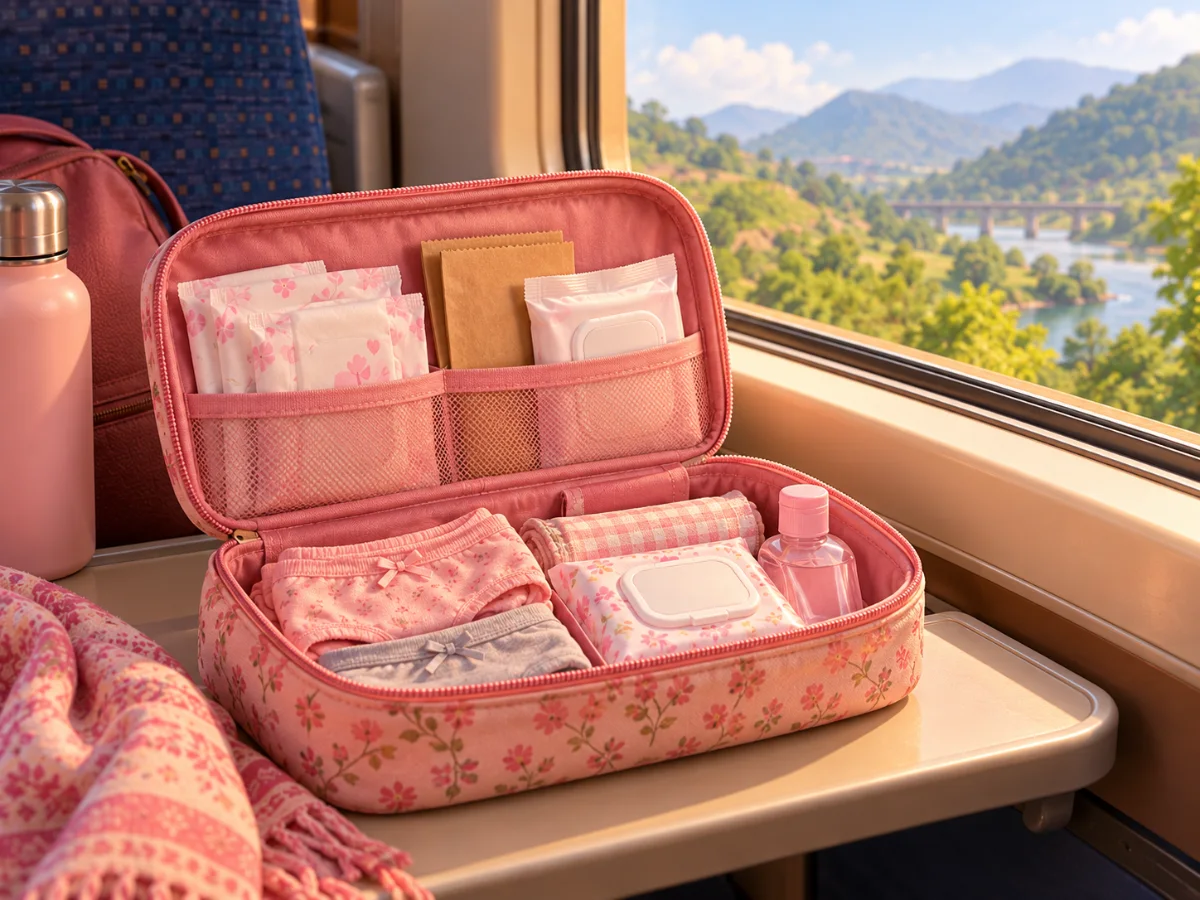
A trip is not the best time to try a new product for the first time. If you want to try a tampon or a menstrual cup, practise at home over one or two periods first. Then you will know how it feels and how to change it.
Tampons and cups take less space than pads, which some girls and women find handy on long trips. Pads and cloth pads work just as well. Use whatever you are comfortable with, and change it on time:
On a long trip, set a reminder on your phone so you do not lose track of time.
If you use a tampon or a cup, know the signs of toxic shock syndrome. It is rare but serious. If you get a sudden high fever, vomiting, a rash like sunburn, or you feel faint, remove the tampon or cup and see a doctor at once.
Look out for clean toilets before you need one, at railway stations, airports, bus stands, petrol pumps or highway restaurants. On a long road trip, plan a stop every few hours. On a train, keep your kit in a small pouch you can hang on the hook, and hold the rail for balance. Wash your hands before and after you change.
Wrap a used pad in paper and put it in a dustbin. Never flush it down the toilet or throw it out of a window. Keep used cloth pads in their pouch until you can wash them with soap and dry them fully in sunlight.
Heat patches stick on the inside of your clothes, never on bare skin, and give gentle warmth for hours. Do not sleep with one on. They are light and easy to carry. If you want to take a gel heating pad or a hot water bottle on a flight, check the airline's rules first.
A painkiller can help too. It usually works best when you take it as soon as the cramps begin. Ask a doctor or pharmacist which painkiller is right for you before your trip, and keep it in its original packet.
On long rides, stand up, stretch and walk a little every hour or two. Wear loose, comfortable clothes.
Carry a water bottle and drink often. It is easy to drink less when toilets are hard to find, but that can leave you tired and makes a urine infection more likely. Pack simple snacks like roasted chana, makhana, nuts, fruit, bananas or a little dark chocolate.
If your period starts when you do not expect it, take a slow breath. Stains wash out. Chemists, station stalls and airport shops usually sell pads. You can also ask another woman nearby, and most will be glad to help. Rest when you can, and be kind to yourself.
If you are travelling with family or friends, tell someone you trust that you are on your period. Then they will understand if you need a toilet stop or a rest. Periods are a normal part of life, and nothing to feel shy about.
Sometimes timing matters a lot, for a wedding, a pilgrimage, an exam or a sports event. If you would rather not have your period on those days, talk to a doctor a few weeks ahead. There are safe ways to delay a period, but they need a prescription. Do not take tablets on a friend's advice or buy them without one.
Have a question about periods while travelling? Call our menstrual helpline on 85888 70999. It answers at any hour.
A simple printable sheet that marks your period days, your fertile window and your ovulation day. We will email it to you now.
We will send the tracker and a few gentle menstrual health emails from Khyati at Pinkishe. No spam, unsubscribe any time.
Prefer to work out your dates now? Open the free ovulation calculatorStay calm and use your period kit. If you do not have one, chemists, railway station stalls and airport shops usually sell pads. If you have nothing else, folded clean tissue or cloth can work for a short while until you buy a pad.
Rules differ from airline to airline, so check before you fly. Stick-on heat patches are the easiest option, as they are small and light.
Yes, if you change it on time. Change a tampon every 4 to 8 hours and never leave it in for more than 8. Empty a cup at least every 12 hours. Set a reminder on your phone so you do not forget.
Yes. Stress, less sleep, long hours of travel and new time zones can make a period come a little early or late. If your period is late and you could be pregnant, take a pregnancy test.
Wrap it in paper or a small paper bag and keep it until you find a dustbin. Never flush a pad or throw it out of the window. Carry used cloth pads in a zip pouch until you can wash them.
There are safe ways to delay a period, but they need a prescription. Talk to a doctor a few weeks before your trip. Do not take tablets without a doctor's advice.
With a small kit and a little planning, you can travel comfortably on your period. Change your product on time, find clean toilets along the way, carry water and snacks, and ease cramps with heat or a painkiller that suits you. If dates matter, talk to a doctor a few weeks ahead.
Pinkishe Foundation is a specialist implementation organisation for menstrual health. We deliver, reliably, in schools and communities across India. Support our work with a donation.
₹1,100 gives one girl a year. Donations are eligible for tax deduction under Section 133 of the Income-tax Act, 2025 (earlier Section 80G).