A schoolgirl supported by Pinkishe Foundation
For CSR & philanthropy

Fund Menstrual Health
with India’s specialists

FCRA, CSR-1, 80G and 12A certified. Registered on the NSE Social Stock Exchange. Focused exclusively on menstrual health since 2017, with programmes across 150 districts in 30 states and union territories.

8,04,512+
Menstruators supported
77,45,143
Sanitary pads distributed
6,031
Period workshops conducted
150
Districts across 30 states & UTs
50+
Corporate & institutional partners

Cumulative programme data to July 2026.

Why this matters now

The Court did not stop at recognising a right. It set clear standards for menstrual health in schools.

On 30 January 2026 the Supreme Court held menstrual health to be part of the right to life under Article 21, and issued detailed directions for schools. India has reached a point where the standards are becoming clear. We have spent nine years building much of what is now being asked for.

Among the directions issued were:

1

Free menstrual products

Free sanitary napkins made readily accessible to girls in schools, preferably through vending machines near toilet premises or through designated access points.

2

Safe disposal

Environmentally compliant disposal, in line with the applicable Solid Waste Management Rules.

3

Education & training

Menstrual education in the curriculum, with teachers trained to deliver it.

4

Periodic inspection

District Education Officers conducting periodic inspections, preferably once a year, covering facilities, product access, disposal and menstrual health awareness.

Our school work already addresses several of the areas the judgment emphasises: product access, vending, safe disposal, menstrual education, teacher support and monitoring. For a CSR team, the judgment makes it far clearer what a school programme needs to include.

Before you commit a rupee

The eleven questions every CSR committee asks

Answered here, so your diligence can start before the first meeting rather than after it.

Nine years, one subject

Focused exclusively on menstrual health since 2017. Around 6,000 workshops.

50+ partners

Corporate and institutional partners, including Amazon India, Indus Towers, Meta, Adobe and P&G.

Live IoT dashboard

Designed and built in-house, with partner access to usage, stock and refill data.

Aligned to the judgment

Our school model already covers several areas the 30 January 2026 directions emphasise.

Are you legally eligible to receive our CSR funds?
Yes. Pinkishe Foundation holds valid CSR-1, 12A and 80G registrations and has the required track record to act as a CSR implementing agency. We also hold FCRA registration for eligible foreign contributions. Menstrual health falls within Schedule VII under healthcare and sanitation. Every registration number and certificate is available further down this page.
Will this survive our auditor and our board?
Our accounts are independently audited and published every year. Combined figures across Pinkishe Foundation and Pinkishe Women Association have grown from ₹1.01 crore in FY 2022-23 to ₹3.2 crore in FY 2024-25, both audited, with FY 2025-26 provisionally at ₹4.5 crore. We are registered on the NSE Social Stock Exchange. Audited reports and annual reports are linked below.
Will we be funding a learning curve?
Pinkishe has focused exclusively on menstrual health and hygiene for nine years, with roughly 6,000 workshops across 30 states and union territories. This is not one programme among many for us; it is our core work.
Do you have genuine subject expertise?
Doctors sit on our panel. Our Period Bol curriculum and booklets were written for Indian classrooms, in Indian languages, and tested across thousands of sessions. We work with boys, men, teachers and families as well as girls, because a programme that speaks only to girls leaves the silence intact.
Have you delivered work like ours, at our scale?
Amazon India in urban poor settlements. Indus Towers across districts. Garment manufacturers across multiple factory sites. More than fifty corporate and institutional partners in all. Engagements run from a single site to a hundred schools across a district.
Can you work in our geography?
We work across both rural and urban India, from aspirational districts and remote rural blocks to difficult geographies and urban poor settlements in some of India’s largest cities. Our work currently spans 150 districts across 30 states and union territories.
Can you work within our budget?
Whatever your budget, you receive the same standard. We design to your allocation, your geography and your mandate rather than selling a fixed package. Whether it is a single site or a district-scale programme, the same implementation standards and the same reporting discipline apply.
What reporting will we actually get?
A live dashboard, not a document typed up at year end. Our IoT-enabled machines report consumption, stock and usage patterns as they happen, and you can open it on your phone. We designed and built it ourselves, and it comes with your programme.
Can you handle the government side?
District administrations, education departments and school authorities are part of our regular working method rather than something we discover late. With District Education Officers now expected to inspect schools periodically, that relationship matters more than ever.
How do you measure whether it worked?
Monitoring, evaluation and learning are built into the programme rather than bolted on at the end. Baselines before we begin, measurement throughout, and honest reporting of what did not work alongside what did. We track attendance, knowledge, product use and community attitude across the life of the project.
What happens after you leave?
We design long-term programmes so that the core systems can continue beyond the grant period: machines maintained, refill chains established, teachers trained and local champions in place. Larger engagements are often designed over multiple years because systems and behaviour change take time to become embedded.

Who funds this work

Organisations that have funded our work

More than fifty organisations have funded Pinkishe Foundation.

What a school project includes

Menstrual health delivered as a system, not a donation drive

Pads without education, or machines without monitoring, is where menstrual health programmes usually fail. Every Pinkishe school project puts all three layers in place together.

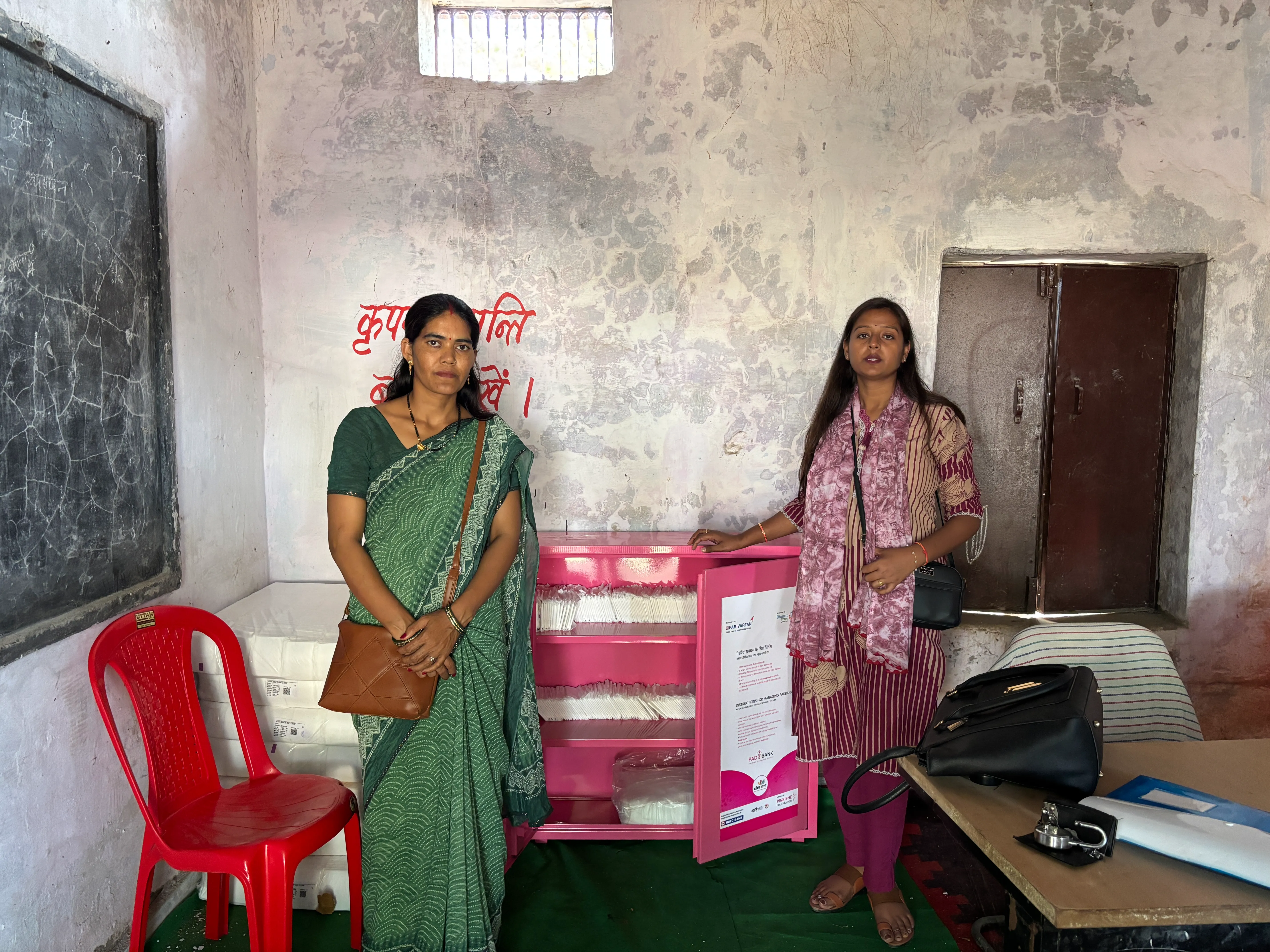
A Pinkishe pad bank cabinet in a classroom
Layer one

School infrastructure

IoT-enabled vending machines, PadBank storage units for emergency access, and disposal bins, installed in every school in the project.

An educator teaching menstrual health
Layer two

Education and support

Sessions for schoolgirls and community women, boys’ orientation, trained nodal teachers and Sakhi peer champions inside each school.

Community monitoring visit
Layer three

Monitoring and continuity

Dashboard tracking, refill monitoring, field visits, helpline support, and baseline and endline assessment, so you can see whether it held.

Executed work

What a delivered programme looks like

Not a proposal. A running programme, with every figure below coming off the live dashboard rather than a report.

Nari Samman

Government schools in Telangana, Chhattisgarh and Uttarakhand
211 government schools
5 districts across 3 states
64,877 girls in supported schools
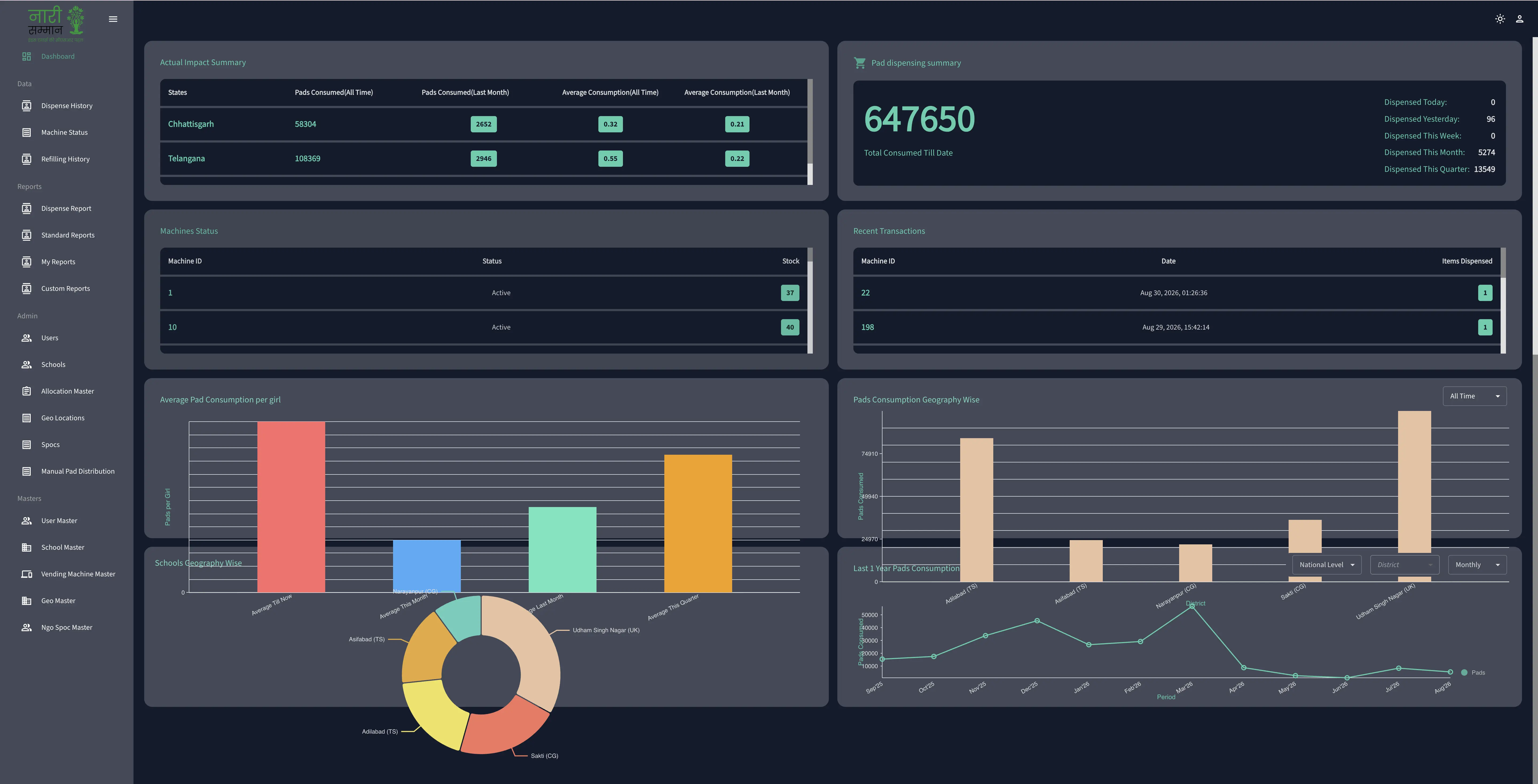
6,47,650 pads dispensed to date

Dashboard snapshot as of August 2026.

Delivered with corporate support including Indus Towers. Every machine reports stock and consumption into the dashboard, and the last dispense and last refill date is on record for each of the 211 schools.

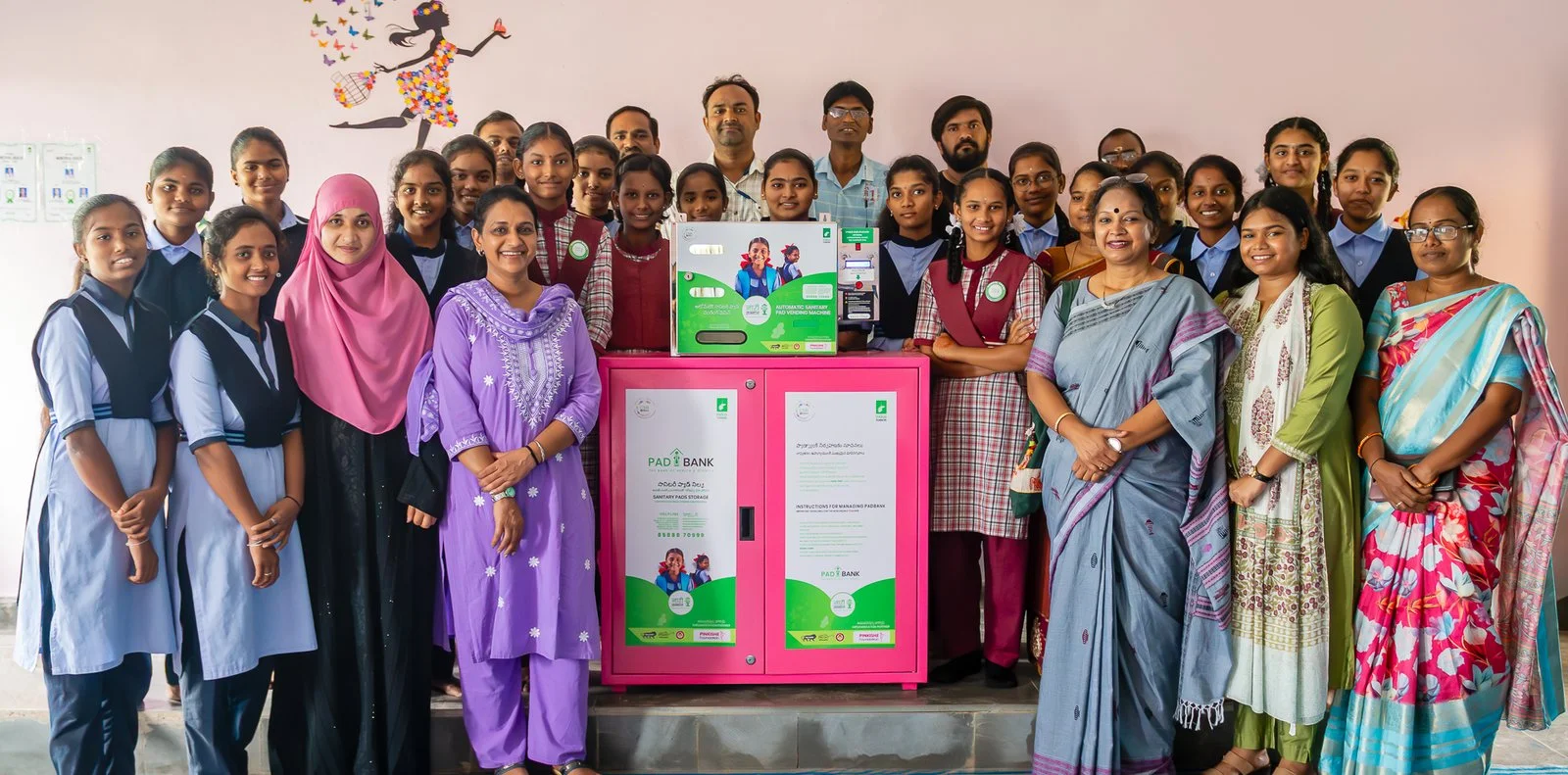
Teachers and students standing with a sanitary pad dispensing machine and Pad Bank at a government school in Adilabad district, Telangana
Teachers, students and the Pinkishe and Indus Towers teams at a government school in Adilabad district, Telangana.
Ways we can work together

Different mandates need different programmes

Schools are the largest part of our work, but they are not all of it.

Schools and districts

Complete school-based menstrual health systems. Vending machines, PadBank units, safe disposal, curriculum sessions, trained nodal teachers, Sakhi peer champions and dashboard monitoring.

Communities and workplaces

Education and product access outside the school system. Community sessions for women, the Period Bol Van mobile awareness unit, street theatre, wall murals, period pain simulator camps, and sessions for your own teams.

Custom CSR partnerships

Multi-year programmes built around your geography, your target population, employee engagement and your CSR mandate. Most of our partnerships began as a conversation rather than a proposal.

What a school-based CSR budget supports

Every rupee maps to something countable

Indicative funding levels for our school model. Community, workplace and custom programmes are costed to the design rather than to this list.

₹1,000
One girl for a year. Her pads, plus her share of the machine, the sessions, the trained teacher and the monitoring.
₹25,000
One PadBank vending unit with its first stock of pads.
₹2.2 lakh
One complete school for twelve months. Machine, pads, curriculum sessions, trained teacher, student champions, disposal and monitoring.
₹22 lakh
Ten schools, reaching about 2,000 girls.
₹1.1 crore
A fifty-school programme.
₹2.2 crore
A hundred-school, district-scale programme.
Built in-house

Live reporting is built into the programme

Our machines are not only dispensers. Each reports what was taken, when, and what is left, into a dashboard you open on your phone.

  • Live, not annual. Consumption and stock as it happens, rather than a document typed up in March.
  • Useful for monitoring and documentation. With schools and district authorities now required to demonstrate what is in place, this is the kind of record that helps.
  • Designed and built by us. Partners get their own access to usage, stock and refill data, and it comes with your programme.

The machines are a top-up and emergency channel rather than a girl’s whole monthly supply, which is why PadBank stock and direct distribution run alongside them. The dashboard shows you both.

The Nari Samman dashboard showing machine status, geography and pads dispensed across three states
The Nari Samman dashboard, captured 30 August 2026.
The government view

A District Collector on what changed in his schools

“The attendance level of the girls has increased. In many schools we have clearly seen the results.”Shri Rajarshi Saha, IAS, District Collector, Adilabad, Telangana

Recorded in Adilabad, on our programme in the government schools of that district, delivered with support from Indus Towers. The interview runs 8 minutes 31 seconds and is unedited. It relates to work Pinkishe has completed there.

Diligence

Registered, certified and audited

Pinkishe Foundation is a registered public charitable trust eligible to implement CSR programmes. We hold valid CSR-1, 12A and 80G registrations, along with FCRA registration for eligible foreign contributions. Every certificate below opens as a PDF.

Financial transparency

Combined financial figures across Pinkishe Foundation and Pinkishe Women Association. CSR grants are received by Pinkishe Foundation, which holds the CSR-1 registration.

₹1.01 Cr FY 2022-23, audited
₹2.14 Cr FY 2023-24, audited
₹3.2 Cr FY 2024-25, audited
₹4.5 Cr FY 2025-26, provisional
Great Place to WorkCertified
Top 10 Workplaces for WomenIndia, 2024
Vox Future Perfect 25Global honour, 2025
5-star rating on GoogleFrom more than 2,400 people
A girl at a Pinkishe session
“If you are exploring a menstrual health programme, large or small, please write to us. We will first try to understand what you are trying to achieve, before we suggest a model.”
Arun Gupta Managing Trustee & President, Pinkishe Foundation

Start with a conversation, not a proposal

You do not need an approved budget or a finalised theme. Most of our partnerships began as an exploratory call. Tell us what you are trying to achieve and we will come back within one working day, with no obligation.

Start a conversation ↓
Or write directly to chair@pinkishe.org

Tell us what you are exploring

Thank you. We have your details and someone from our team will write to you within one working day.
Sorry, that did not go through. Please write to us at chair@pinkishe.org and we will pick it up from there.

You can also write directly to chair@pinkishe.org.