For girls 13 to 17
बड़े होना: तुम्हारा पीरियड, तुम्हारा शरीर
Eight short guides, like talking to a didi: what is normal, what helps with pain, school, sport, moods and myths. In English and Hindi.
Want to ask something privately? Call our free menstrual helpline on 85888 70999.
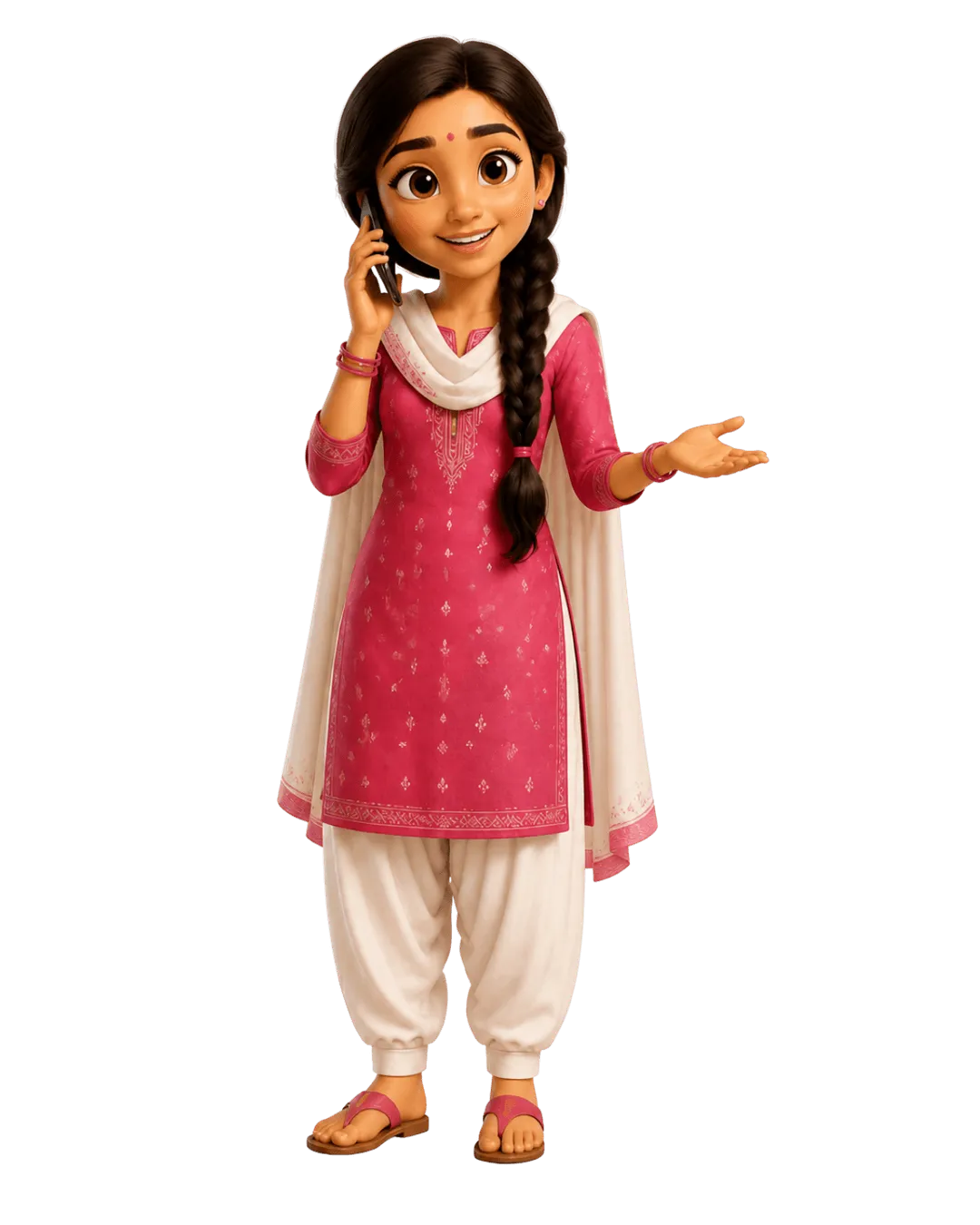
Every girl has questions about growing up. Some feel too awkward to ask out loud. These guides are here for exactly that. Read them on your own or with a friend, and come back whenever you need.
In the first two or three years, periods are often irregular. That is normal. Mark your period on a calendar, and you will soon know your own pattern.
What is normal for most girls your age
Track your cycle
Tell your mother, a didi, or a doctor if
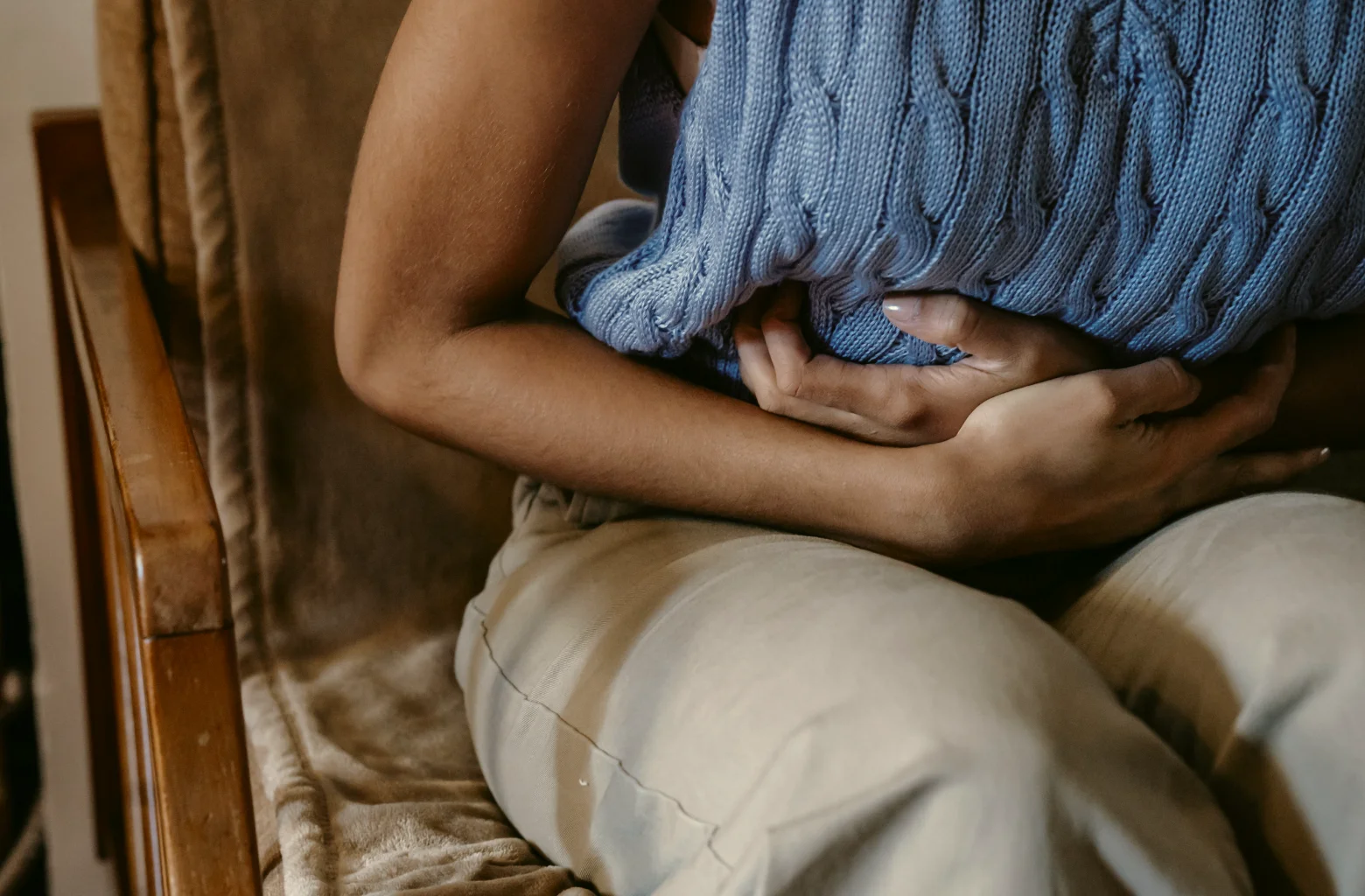
Some cramping on the first day or two is common. Warmth, rest and gentle movement help. Pain that stops you from going to school is not something you have to put up with.
Why it hurts During your period, the womb squeezes to push out its lining. These squeezes are cramps. You may feel them in your lower tummy, back or thighs. Some girls also feel tired, have loose motions or a headache.
What helps
About medicine Do not take any medicine for period pain without asking your parent or a doctor first.
Tell an adult and see a doctor if
Bad period pain can have causes that a doctor can treat. You do not have to be brave about it alone.
White or clear discharge is normal. It keeps your body clean. Tell an adult if it smells bad, itches, or turns green, yellow or grey.
What is normal
Keep clean, simply
Tell your mother, a didi or a doctor if
These are common and easy to treat. There is nothing to be ashamed of.
Use what you can keep clean and change on time. Pads and clean cloth are both good choices. Cups and tampons are used inside the body; talk to your mother, a didi or a doctor before trying them.
Sanitary pads
Cloth pads
Period underwear
Menstrual cups and tampons
Whatever you use
You can go to school, play and take part in everything during your period. A small kit in your bag and a plan for stains make it easy.
Your school kit
If it starts in class
Sports, PT and dance
Toilets at school
Your body and feelings change a lot in these years. Pimples, moods before your period, new hair and a changing shape are all part of growing up.
Moods
Pimples
A changing body
About food and weight
Irregular periods are common in the first years and usually settle. If they stay very irregular, with lots of pimples or extra hair, a doctor can check for a condition called PCOS.
Why periods are irregular at first It takes the body two or three years, sometimes more, to settle into a regular rhythm. Stress, exams, illness, travel and big changes in weight can also delay a period.
What PCOS is PCOS (often called PCOD in India) is a common hormone condition. Signs can include periods that are very far apart, many pimples, and thick hair on the face or body. Only a doctor can say if you have it. One ultrasound scan is not enough to say so in girls your age.
When to see a doctor
What helps either way
PCOS is common and can be managed. It is not your fault.
Many things girls are told about periods are not true. Here is what doctors say.
| You may have heard | What is true |
|---|---|
| Do not bathe or wash your hair during periods | Bathing and washing your hair are safe and good for you |
| Do not eat curd, pickle or sour food | No food is harmful during periods |
| Do not play or exercise | Exercise is safe and often reduces cramps |
| Period blood is dirty or impure | It is the lining of the womb, not dirty blood |
| Do not touch plants or food, they will spoil | Nothing you touch is harmed by your period |
| Periods mean you are now ready for marriage | A first period means the body is starting to grow up. It is not a sign of being ready for marriage. In India the legal age of marriage for girls is 18 |
| You cannot tell anyone about your period | You can talk to your mother, a didi, a teacher, a doctor or our helpline |
Whether to visit a place of worship is a choice for you and your family, and we respect every faith. What matters for your health is that no one keeps you away from water, soap, food, rest or school.
Ask privately on our free menstrual helpline: 85888 70999
In many villages and urban slums, girls go through their first period with no one to explain it, and no pads. If you are a parent, you can help a girl you may never meet. ₹1,100 covers one girl's menstrual protection, education and support for a year. Donate once, or every month. Eligible for tax deduction under Section 133 of the Income-tax Act, 2025 (earlier Section 80G). Giving from outside India.
Keep readingऔर पढ़ो
Nine short reads to go deeper. Pick any one.गहराई से जानने के लिए नौ छोटे लेख। कोई भी चुनो। ये लेख अभी अंग्रेज़ी में हैं।

What to expect, how to get ready, and answers to your questions.क्या होगा, कैसे तैयार रहें, और तुम्हारे सवालों के जवाब।
Readपढ़ो →
Simple, practical ways to stay clean and comfortable.साफ़ और आराम से रहने के आसान तरीके।
Readपढ़ो →
What a period is, why it happens, and what a healthy cycle looks like.पीरियड क्या है, क्यों होता है, और सेहतमंद चक्र कैसा होता है।
Readपढ़ो →
When to see a doctor, and the conditions worth knowing about.डॉक्टर को कब दिखाएँ, और किन दिक्कतों के बारे में जानना ज़रूरी है।
Readपढ़ो →
What happens when girls cannot get pads, and how that can change.जब लड़कियों को पैड नहीं मिलते तो क्या होता है, और ये कैसे बदल सकता है।
Readपढ़ो →
Old beliefs about periods, and why they are changing.पीरियड से जुड़ी पुरानी मान्यताएँ, और वे क्यों बदल रही हैं।
Readपढ़ो →
Common questions, answered simply.आम सवाल, आसान जवाब।
Readपढ़ो →
When periods stop for good, and what it means.जब पीरियड हमेशा के लिए रुक जाते हैं, और इसका क्या मतलब है।
Readपढ़ो →
Food, sleep, sport and everyday life during your period.पीरियड के दिनों में खाना, नींद, खेल और रोज़ की ज़िंदगी।
Readपढ़ो →
Understanding your first period and knowing what to expect, how to prepare, and answers to all your questions.
Find answers on maintaining menstrual hygiene, practical tips and simple cleanliness routines.
Demystifying menstruation, the basics, common queries, and everything you need to know for healthy cycles.