Pinkishe Foundation

31/10/2026
Dr. Shehla Jamal

Getting your first period can feel exciting, strange or a little scary. All of these feelings are normal. A period is a natural, healthy part of growing up. It is a sign that your body is growing and healthy.
A period is when the lining of the womb (uterus) leaves the body through the vagina, as a mix of blood, mucus and tissue. It usually lasts 2 to 7 days. The first period is often light, and the blood may look brown rather than red.
In the first year or two, periods are often irregular, and that is normal. Your period may skip a month or come early. Your body is still settling into its own rhythm.
The more you know, the less there is to worry about. Signs that your first period may come soon include breast growth and a white or clear discharge in your underwear. This discharge is normal and healthy.
Many things people say about periods are not true. Period blood is not dirty or impure. You can bathe, wash your hair, play and go to school as usual. Read our page on period myths, or test yourself with our menstrual quiz.
It is normal to feel shy at first. Talking to your mother, an elder sister, an aunt, a teacher or a friend can help a lot. No question is silly. Everyone who has periods once had a first one.
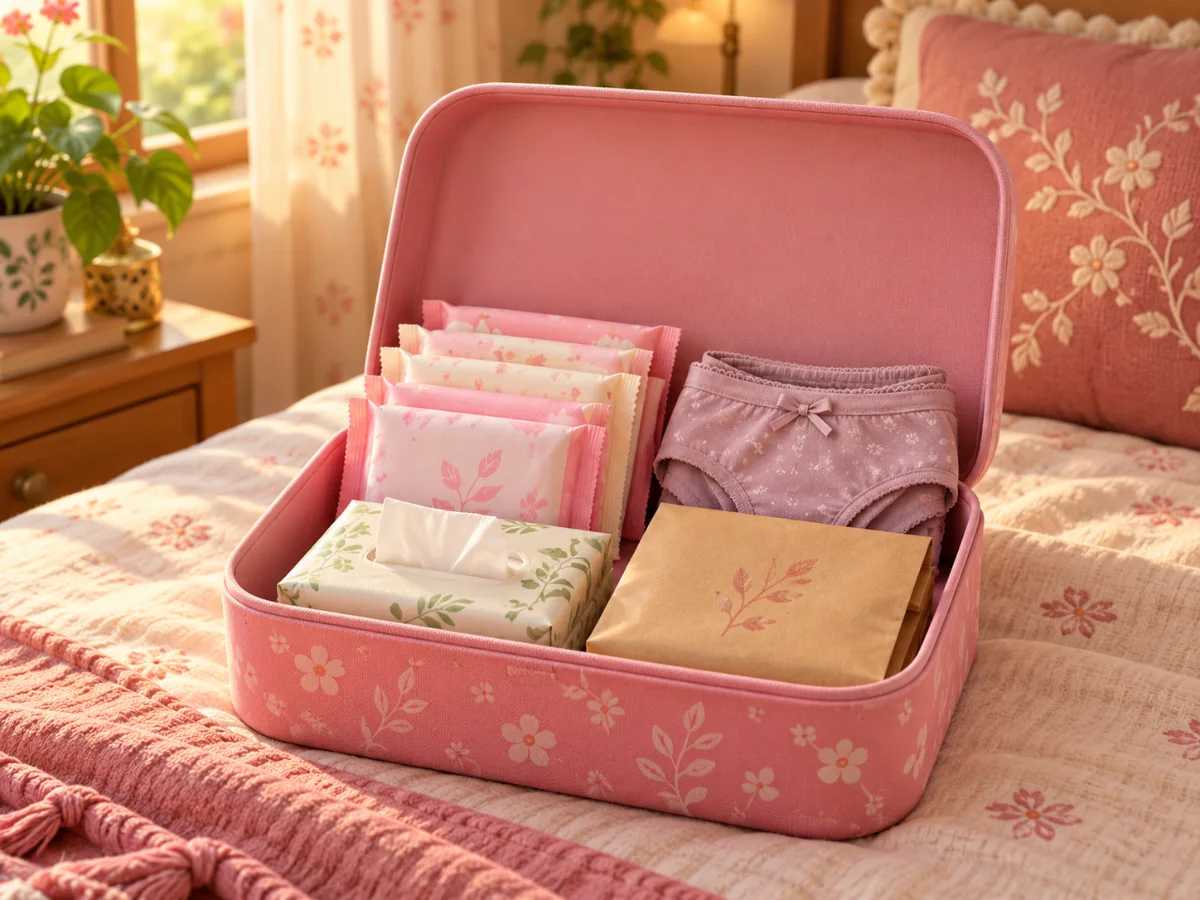
Keep a small period kit in your school bag:
Most girls start with pads. Disposable pads and cloth pads are both safe choices. Change your pad every 4 to 6 hours, or sooner if it feels full. Wrap a used disposable pad in paper and put it in a bin. Never flush it. Wash reusable cloth pads with soap and water, and dry them fully in sunlight. Always wash your hands before and after.
If you later want to try a tampon or a menstrual cup, learn how to use it first, and ask a trusted adult. Change a tampon every 4 to 8 hours, and never leave one in for more than 8 hours. Use the lowest absorbency you need. Empty a cup at least every 12 hours.
Tampons and cups carry a very small risk of toxic shock syndrome, a rare but serious infection. Take the tampon or cup out and see a doctor at once if you get a sudden high fever, vomiting, a rash like sunburn, or feel faint.
Cramps are common. A hot water bottle on your tummy, a warm bath, gentle movement, rest and warm drinks can all help. If the pain is bad, ask a parent to check with a doctor or pharmacist about a painkiller.
Eat regular meals, drink water, and include iron-rich foods such as dals, chana, rajma, ragi and leafy greens.
Mark the first day of each period on a calendar, or use our free period and ovulation calculator. Over time, you will get a rough idea of when your next period may come. Remember that in the first year or two, it may not come on time, and that is normal.
Hormone changes can bring mood swings, tiredness or irritability before and during your period. Be gentle with yourself. Writing in a diary, resting, or talking to someone can help. If low moods last a long time or stop you doing things you enjoy, tell a trusted adult or a doctor.
Talk to a parent or trusted adult, and see a doctor together, if:
See a doctor if breasts start to develop before 8, or the first period comes before 10, or periods have not started by 15.
Have a question about your first period? Call our menstrual helpline on 85888 70999. It answers at any hour.
A simple printable sheet that marks your period days, your fertile window and your ovulation day. We will email it to you now.
We will send the tracker and a few gentle menstrual health emails from Khyati at Pinkishe. No spam, unsubscribe any time.
Prefer to work out your dates now? Open the free ovulation calculatorDo not panic. Ask a teacher you trust or a friend for a pad. If you have no pad, fold some clean tissue or cloth into your underwear until you get one. Keeping a small period kit in your bag helps.
Try a hot water bottle, a warm bath, gentle movement and rest. If the pain is bad, ask a parent to check with a doctor or pharmacist about a painkiller. If pain keeps you away from school, see a doctor.
Yes. In the first year or two, periods often come at different times. See a doctor if they stop for 3 months or come more often than every 21 days.
Most girls start with pads. If you later try a tampon or cup, learn how to use it first. Never leave a tampon in for more than 8 hours, and empty a cup at least every 12 hours.
Mark the first day of each period on a calendar, or use our free period and ovulation calculator.
Your first period is a normal part of growing up. Start with pads, keep a small kit in your bag, and talk to someone you trust. Irregular periods are normal in the first year or two, but see a doctor if anything on the list above happens.
Pinkishe Foundation is a specialist implementation organisation for menstrual health. We deliver, reliably, in schools and communities across India. Support our work with a donation.
₹1,100 gives one girl a year. Donations are eligible for deduction under Section 80G.